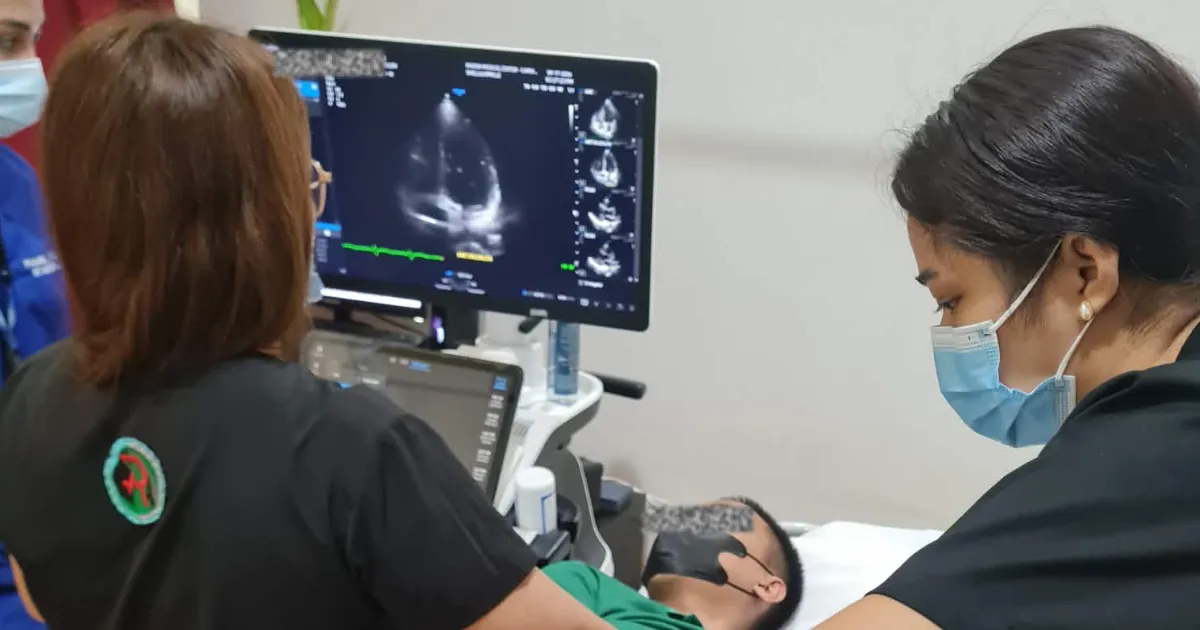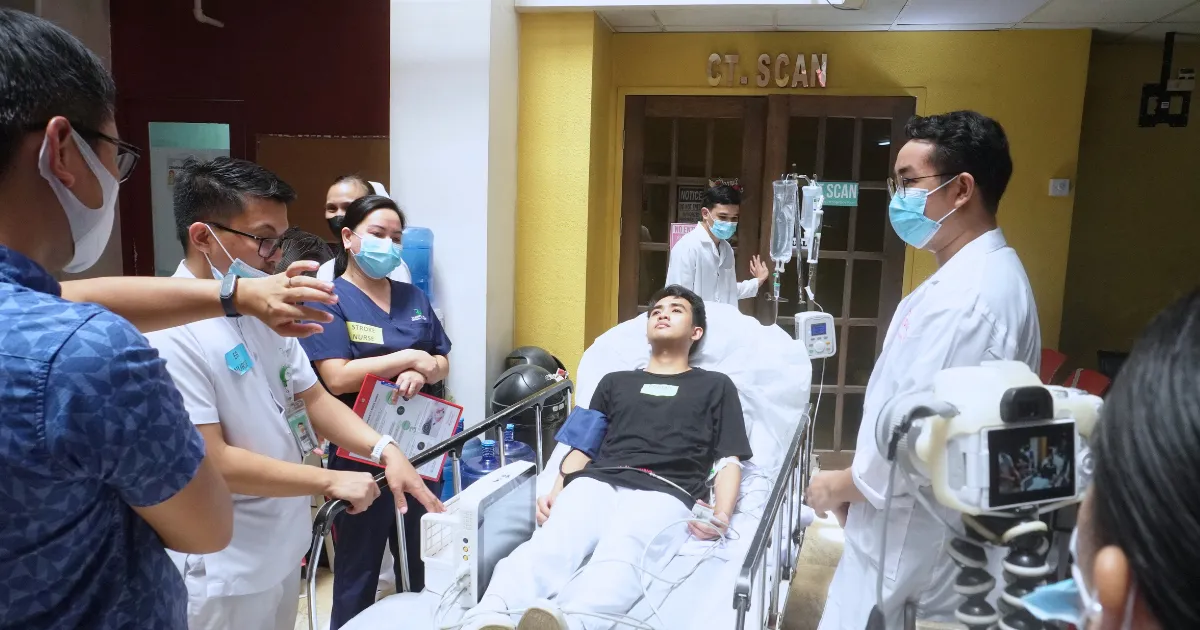
When a person experiences a stroke, every moment matters for both the patient and the brain attack team. But delivering timely stroke care is about more than acting quickly—it is about having an entire hospital team that is prepared, coordinated, and ready to work together from the instant a patient arrives.
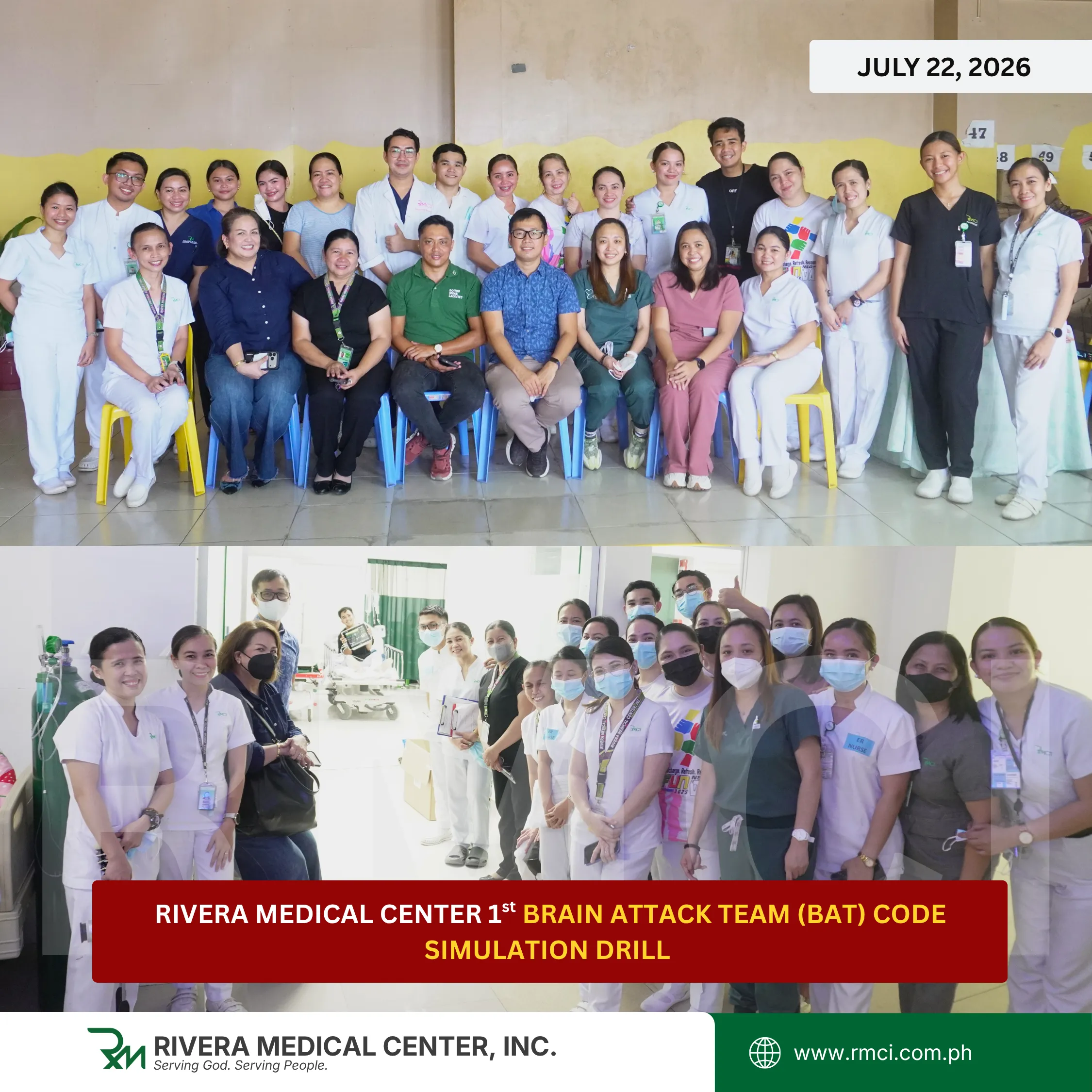
At Rivera Medical Center (RMCI), this commitment to excellence was recently demonstrated through the hospital’s 1st Brain Attack Team (BAT) Code Simulation Drill, done last July 22, 2026. As a Certified Acute Stroke Ready Hospital, RMCI continues to strengthen its ability to provide high-quality stroke care by ensuring that every department understands its role and responds as one unified team.
Stroke Care Is a Team Effort
Many people imagine that stroke treatment depends primarily on the neurologist or emergency physician. In reality, caring for a stroke patient requires the coordinated efforts of numerous healthcare professionals, each performing a critical role at precisely the right time.
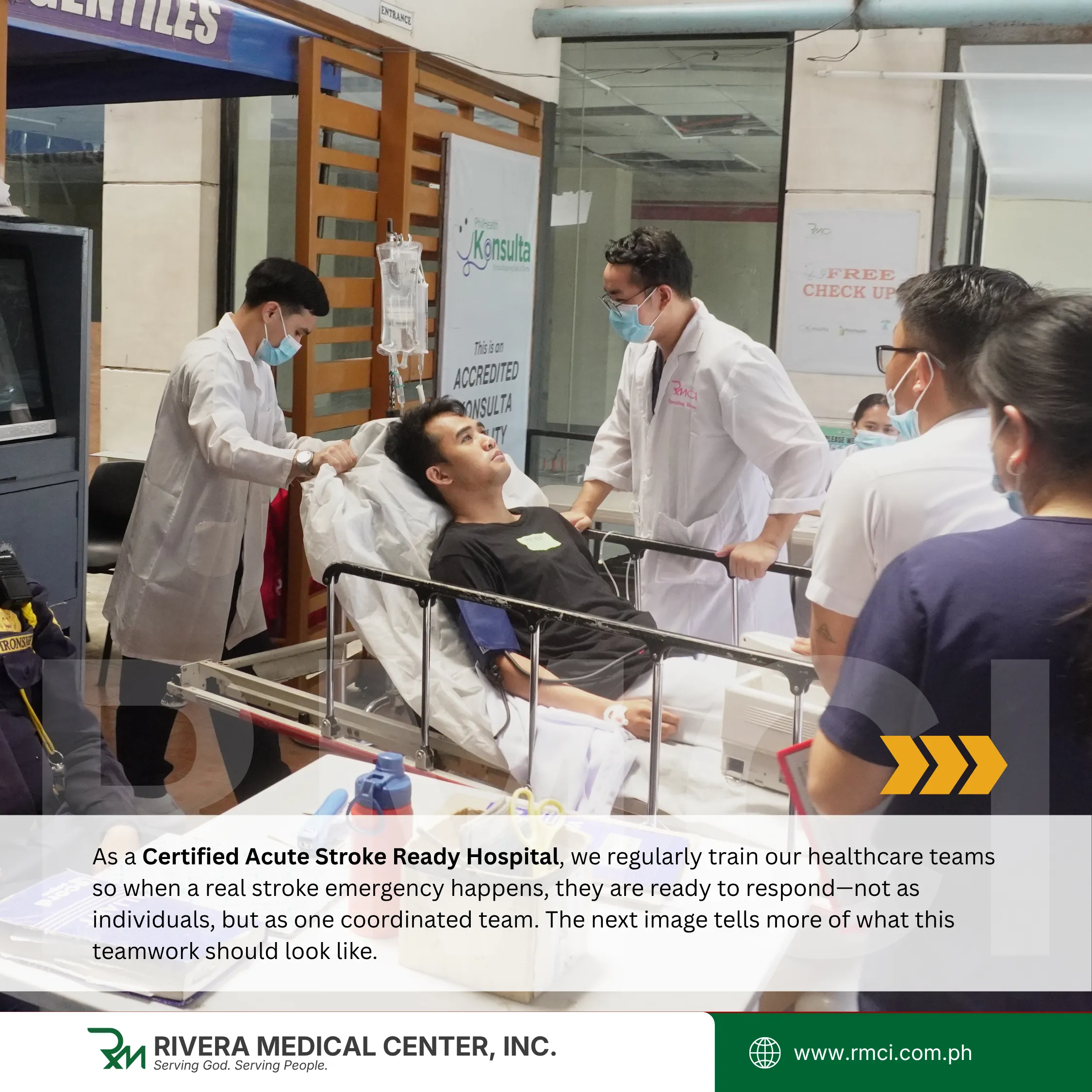
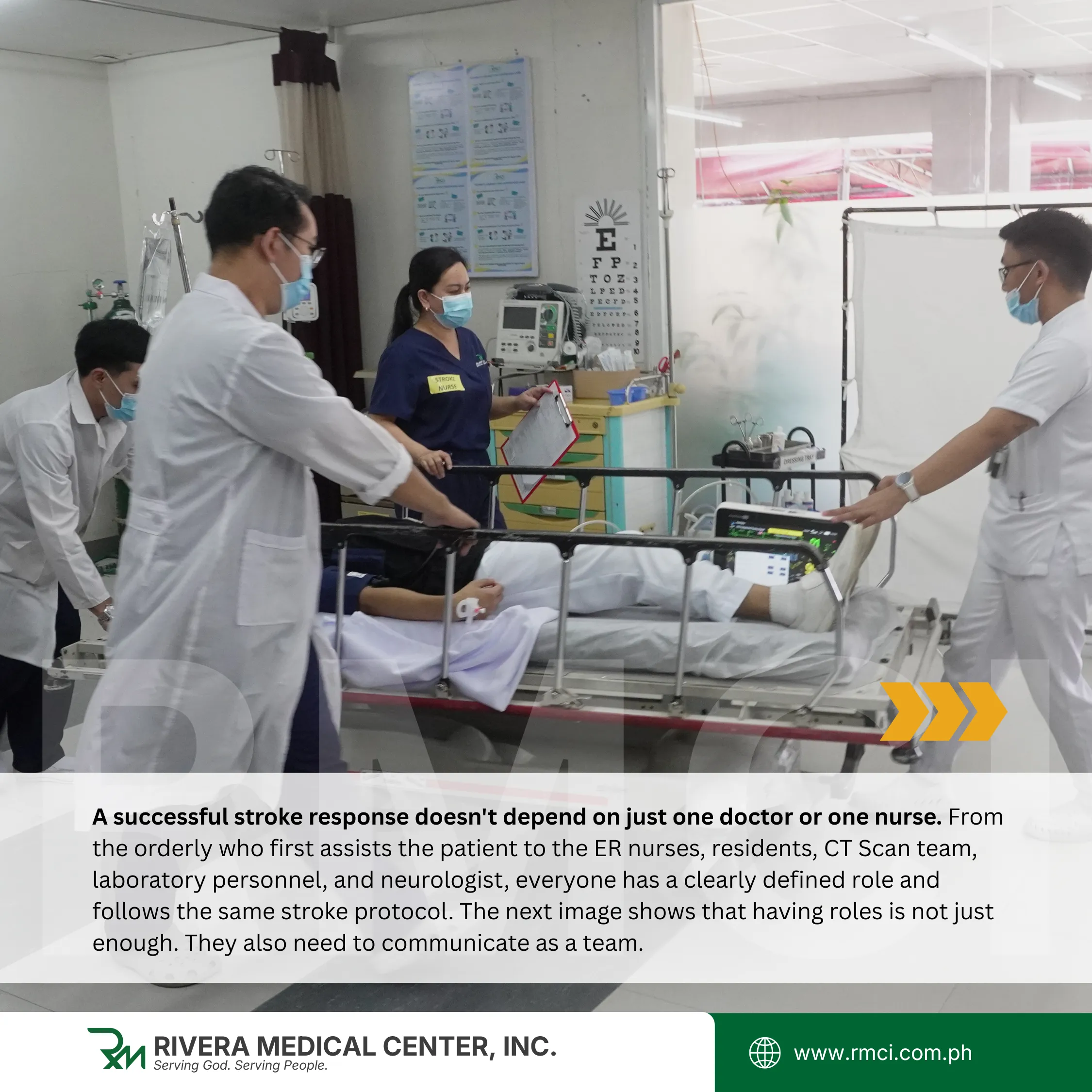
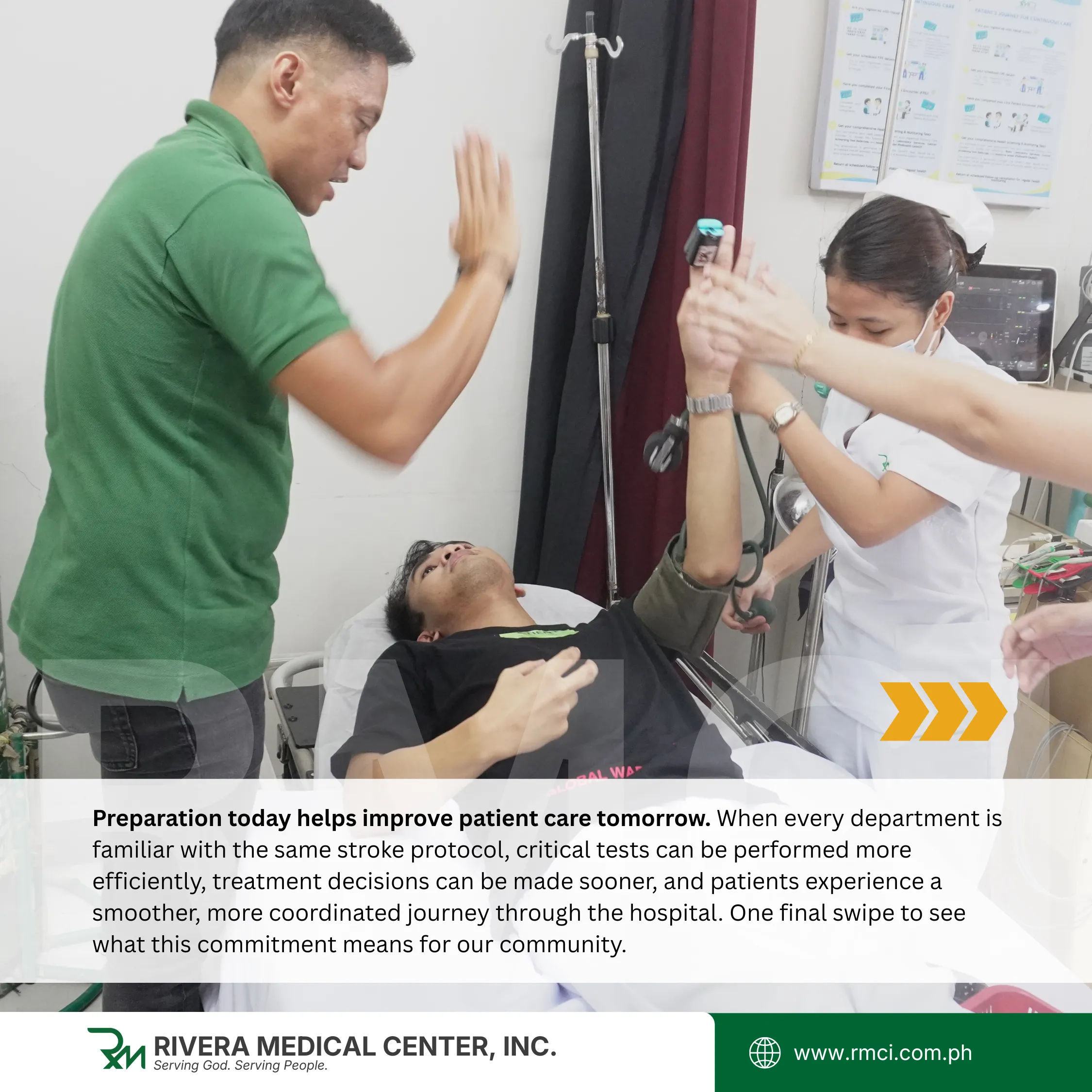
The journey begins the moment a patient enters the Emergency Room. The orderly who first assists the patient, the triage nurse, emergency physicians, residents, laboratory personnel, CT Scan team, neurologist, and support staff all become part of a carefully coordinated response. Every action they take contributes to the next step in the patient’s care.
Because every member follows the same evidence-based stroke protocol, the team is able to work efficiently toward a shared objective—providing the patient with timely, organized, and appropriate medical care.
Why Conduct a Simulation Drill for the Brain Attack Team?
Just as pilots train extensively before flying passengers and firefighters regularly practice emergency responses, our healthcare professionals at RMCI conduct simulation exercises to prepare for critical situations.
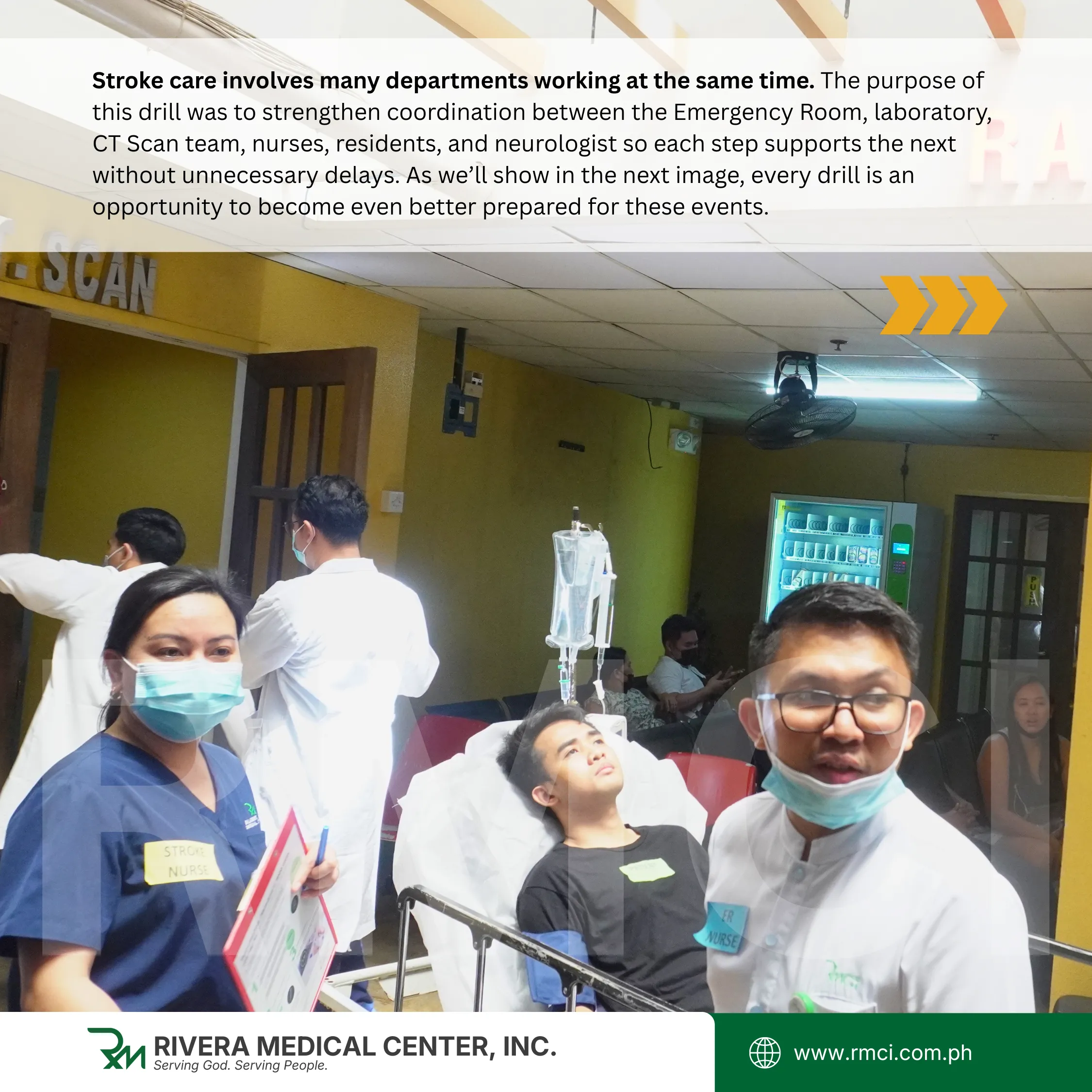
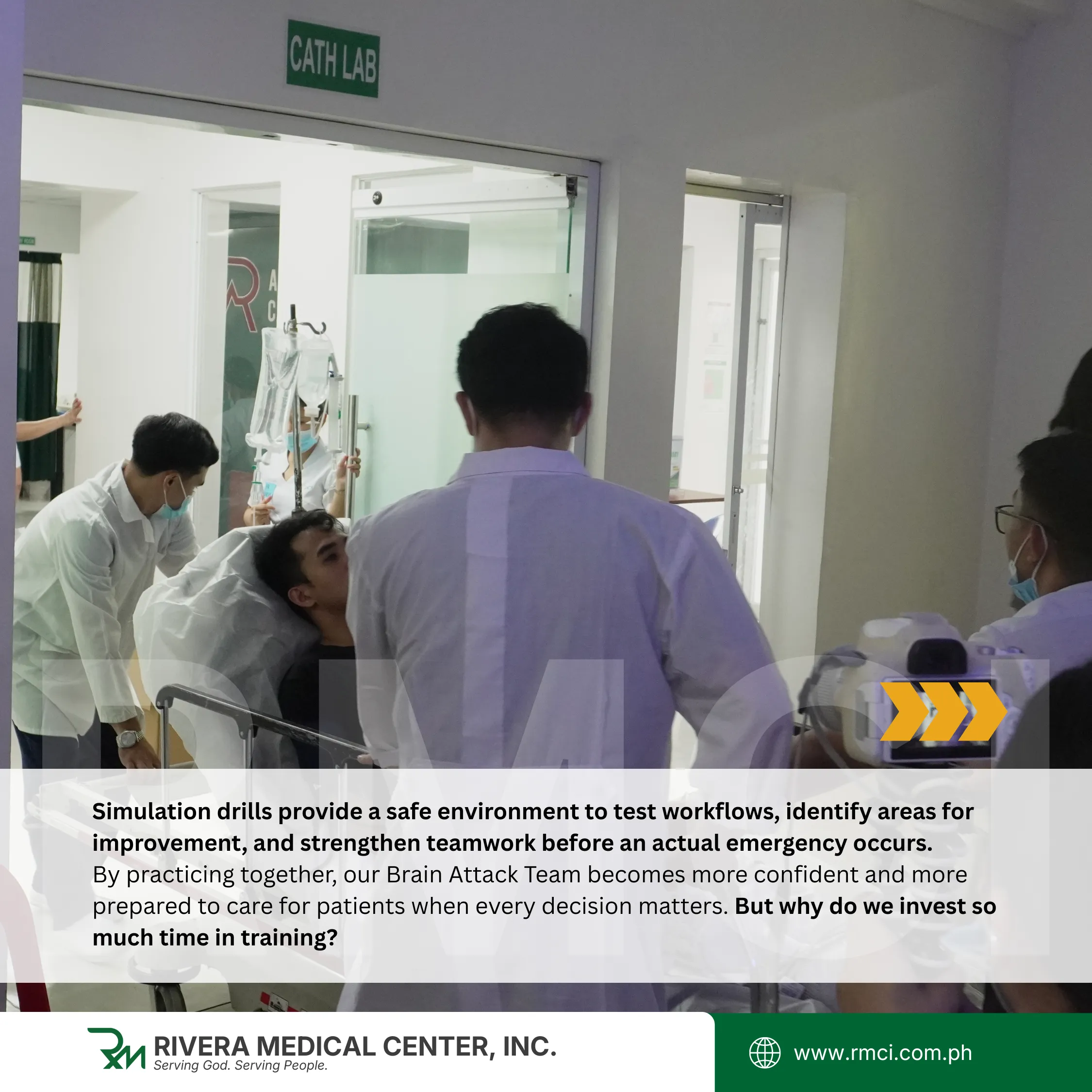
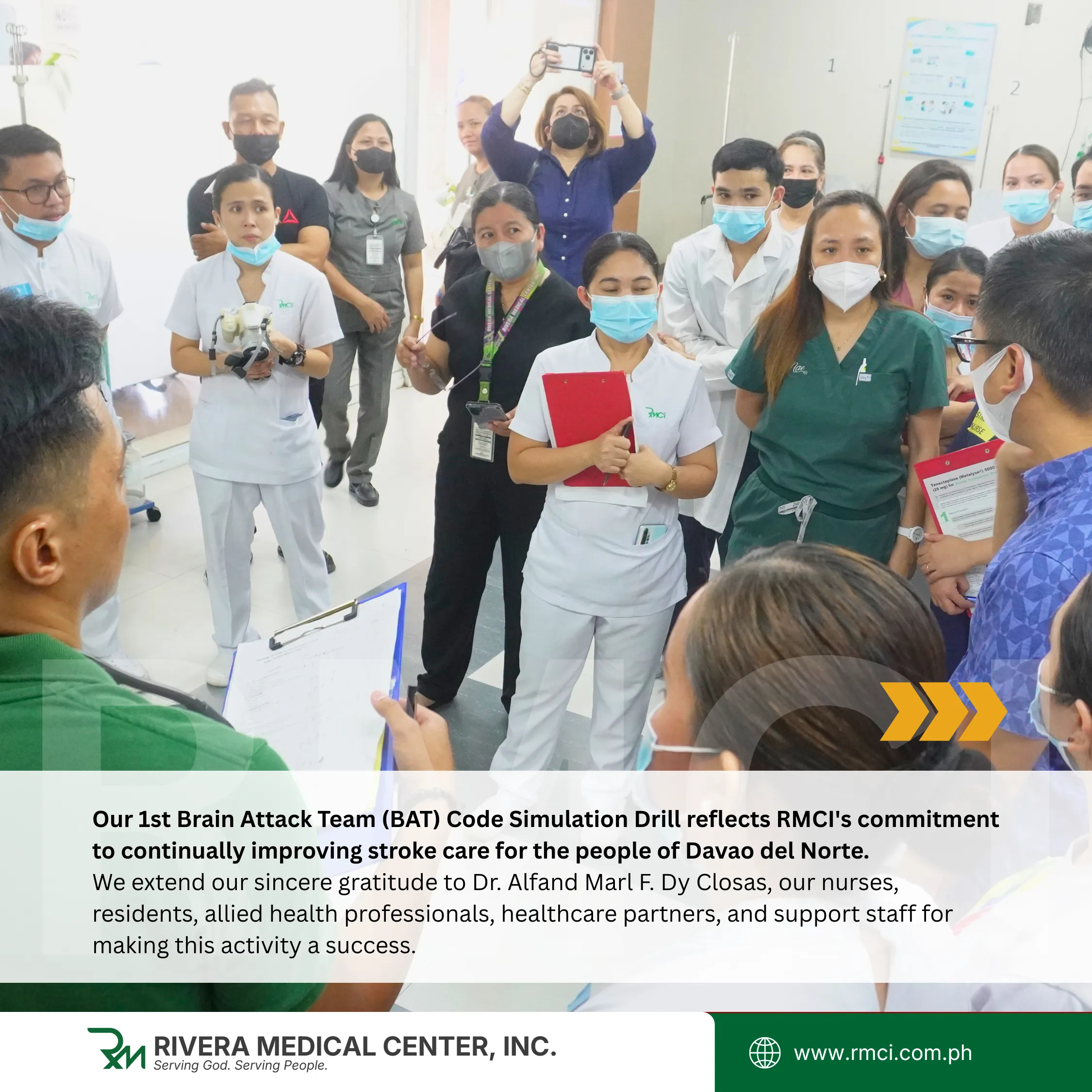
Thus, our Brain Attack Team (BAT) Code Simulation Drill was designed to recreate a realistic stroke emergency within the hospital. Rather than waiting for an actual emergency to test hospital systems, the simulation provided a safe environment where healthcare teams could practice responding under conditions that closely resemble real-life scenarios.
The drill allowed every department at RMCI to rehearse its responsibilities, strengthen communication, evaluate workflows, and identify opportunities for improvement. These simulations help ensure that when an actual stroke patient arrives, the response is smooth, organized, and focused on delivering the best possible care.
Communication Makes the Difference
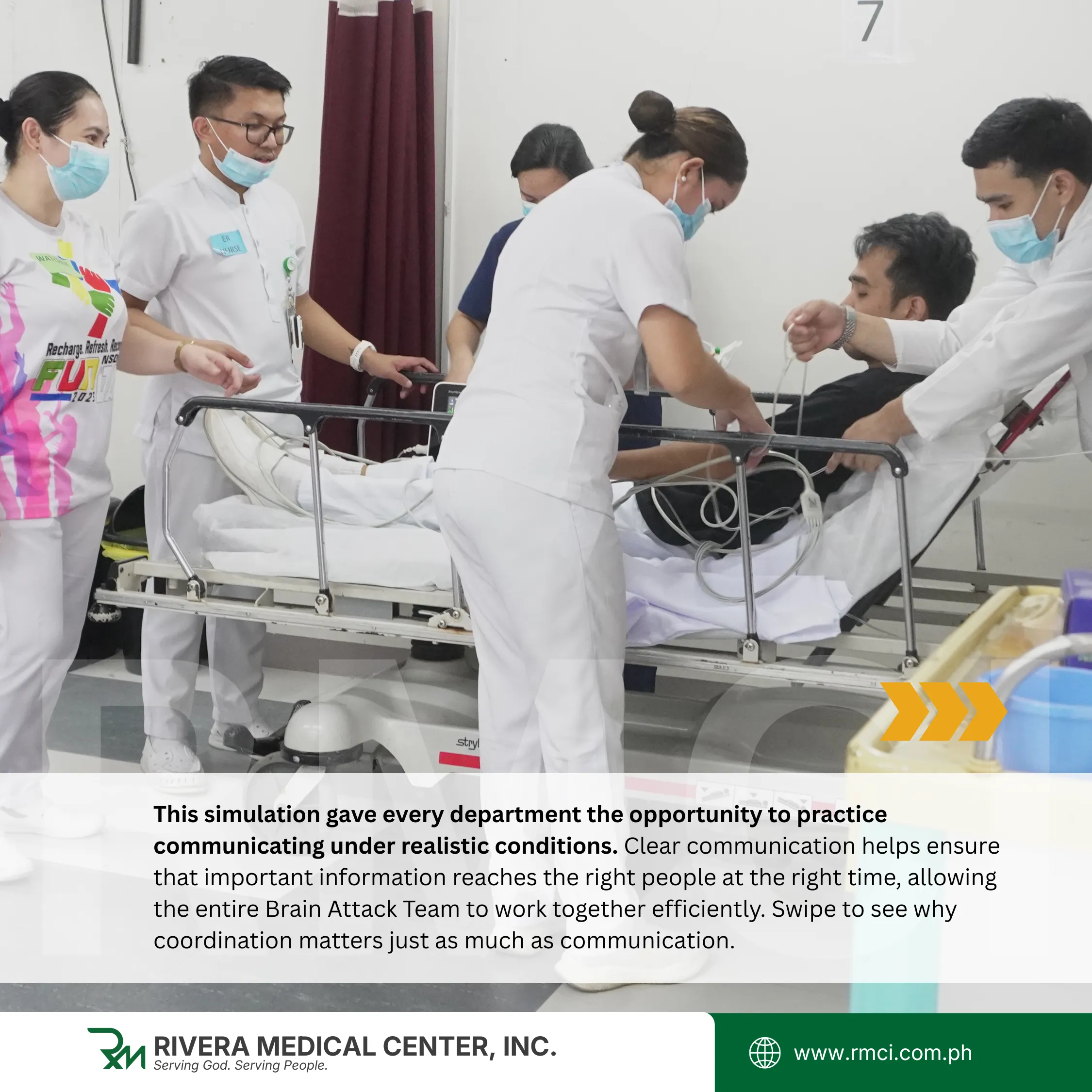
One of the greatest strengths of an effective Brain Attack Team is communication.
During a stroke emergency, information must flow quickly and accurately between departments. The Emergency Room needs to communicate with laboratory personnel. The CT Scan team must prepare for immediate imaging. Physicians need timely diagnostic information to make treatment decisions. Nurses coordinate patient care while continuously monitoring the patient’s condition.
A delay or misunderstanding at any point can affect the overall efficiency of the response.
The American Heart Association recommends that hospitals develop coordinated stroke systems with standardized communication pathways, pre-established protocols, and continuous quality improvement measures to ensure patients receive rapid, evidence-based care.
One Protocol, One Goal
RMCI’s Brain Attack Team is built around a simple but powerful principle: everyone follows the same stroke protocol.
Instead of working independently, every department understands how its responsibilities connect with the work of others. This shared approach minimizes confusion, promotes consistency, and allows the entire team to move together toward the same objective.
When everyone understands the protocol, the hospital can perform critical assessments more efficiently, complete necessary diagnostic procedures promptly, and support physicians in making timely treatment decisions.
Most importantly, patients experience coordinated care throughout their hospital journey.
The World Stroke Organization identifies organized stroke systems, multidisciplinary teamwork, standardized emergency protocols, and ongoing staff education as essential components of high-quality stroke services worldwide.
Continuous Improvement of the Brain Attack Team Through Practice
Healthcare is constantly evolving, and hospitals must continually refine their systems to provide the highest standard of care.
Simulation drills are not simply exercises to confirm that procedures work—they are valuable opportunities to learn.
Following each simulation, the Brain Attack Team reviews every aspect of the response. Team members discuss what worked well, identify areas where communication or workflow can be improved, and develop strategies to make future responses even more efficient.
This commitment to continuous improvement helps ensure that RMCI remains prepared to deliver high-quality stroke care as medical standards continue to advance.
Building Confidence Across Every Department
Training benefits more than hospital systems—it also builds confidence among healthcare professionals.
When doctors, nurses, laboratory personnel, radiologic technologists, and support staff regularly train together, they become more familiar with one another’s roles and responsibilities. This familiarity promotes trust, teamwork, and confidence during high-pressure situations.
Rather than wondering what should happen next, every member of the Brain Attack Team already understands the sequence of care and how to support the rest of the team.
This confidence contributes to a more organized response and a better experience for patients and their families during what is often one of the most stressful moments of their lives.
A Shared Commitment to the Community
RMCI’s 1st Brain Attack Team (BAT) Code Simulation Drill reflects more than a successful training activity. It demonstrates the hospital’s ongoing commitment to serving the people of Davao del Norte through continuous education, preparation, and quality improvement.
The hospital extends its sincere gratitude to Dr. Alfand Marl F. Dy Closas, together with the nurses, residents, allied health professionals, healthcare partners, and support staff whose professionalism and teamwork made the simulation a success.
Their dedication reflects RMCI’s mission of providing compassionate, coordinated, and evidence-based healthcare to every patient who enters its doors.
RMCI’s brain attack team is prepared before an emergency happens
Patients may never witness the hours of preparation that happen behind the scenes. They may not see the simulation drills, planning meetings, or teamwork that takes place before a real emergency occurs.
Yet these efforts make an important difference.
By investing in training today, RMCI ensures that when someone arrives with signs of a stroke, every member of the Brain Attack Team is prepared to respond with confidence, coordination, and professionalism.
That is the value of simulation training—not simply practicing procedures, but building a healthcare team that is ready to provide timely, organized, and patient-centered care whenever it is needed most.
For the community in Davao del Norte province, this means knowing that Rivera Medical Center continues to strengthen its systems, invest in its people, and uphold the highest standards of stroke preparedness as a Certified Acute Stroke Ready Hospital.
📞 For stroke and brain health services, call 0925 780 7696.

References
- American Heart Association/American Stroke Association. 2026 Guideline for the Early Management of Patients With Acute Ischemic Stroke. Stroke. 2026.
- American Heart Association. Creating Optimal Systems of Care for Stroke Treatment.
- Mead GE, Sposato LA, Sampaio Silva G, et al. A Systematic Review and Synthesis of Global Stroke Guidelines on behalf of the World Stroke Organization. International Journal of Stroke. 2023;18(5):499–531.
- World Stroke Organization. Roadmap and Guidelines to Delivering Quality Stroke Care.
- World Stroke Organization. World Stroke Organization Online Guidelines