Bubble Contrast Echocardiography in Davao del Norte: A Closer Look at Heart Health at Rivera Heart Institute
Some heart conditions are difficult to detect with a standard physical examination alone. In the Philippines, heart-related problems are increasing, with Ischemic heart disease as the leading cause of death in 2025.
Because of the need for stronger heartcare services, Rivera Heart Institute offers, among other service, bubble contrast echocardiography.
Even a regular echocardiogram may need additional techniques when a doctor is looking for an abnormal passage of blood between the chambers of the heart. Bubble Contrast Echocardiography, however, often called a bubble study or agitated saline contrast study, helps cardiologists get a better picture of a patient’s heart condition.
At the Rivera Heart Institute of Rivera Medical Center, Inc. in Panabo City, Bubble Contrast is among the heart diagnostic services available to patients who may need further evaluation for abnormal blood flow or possible cardiac shunts.
For patients looking for Bubble Contrast in Panabo City, Davao del Norte, Carmen, or Tagum City, understanding what the test does—and why a cardiologist may recommend it—can make the procedure less intimidating.
What Is a Bubble Contrast Test?
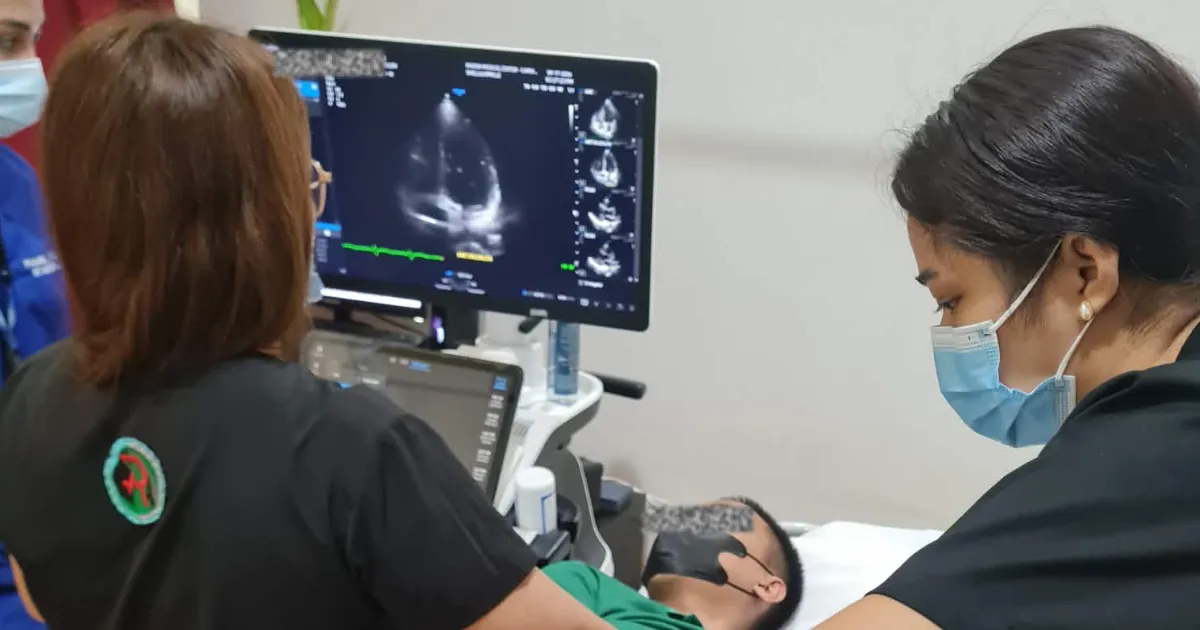
A Bubble Contrast test is usually performed together with an echocardiogram, an ultrasound examination that produces moving images of the heart.
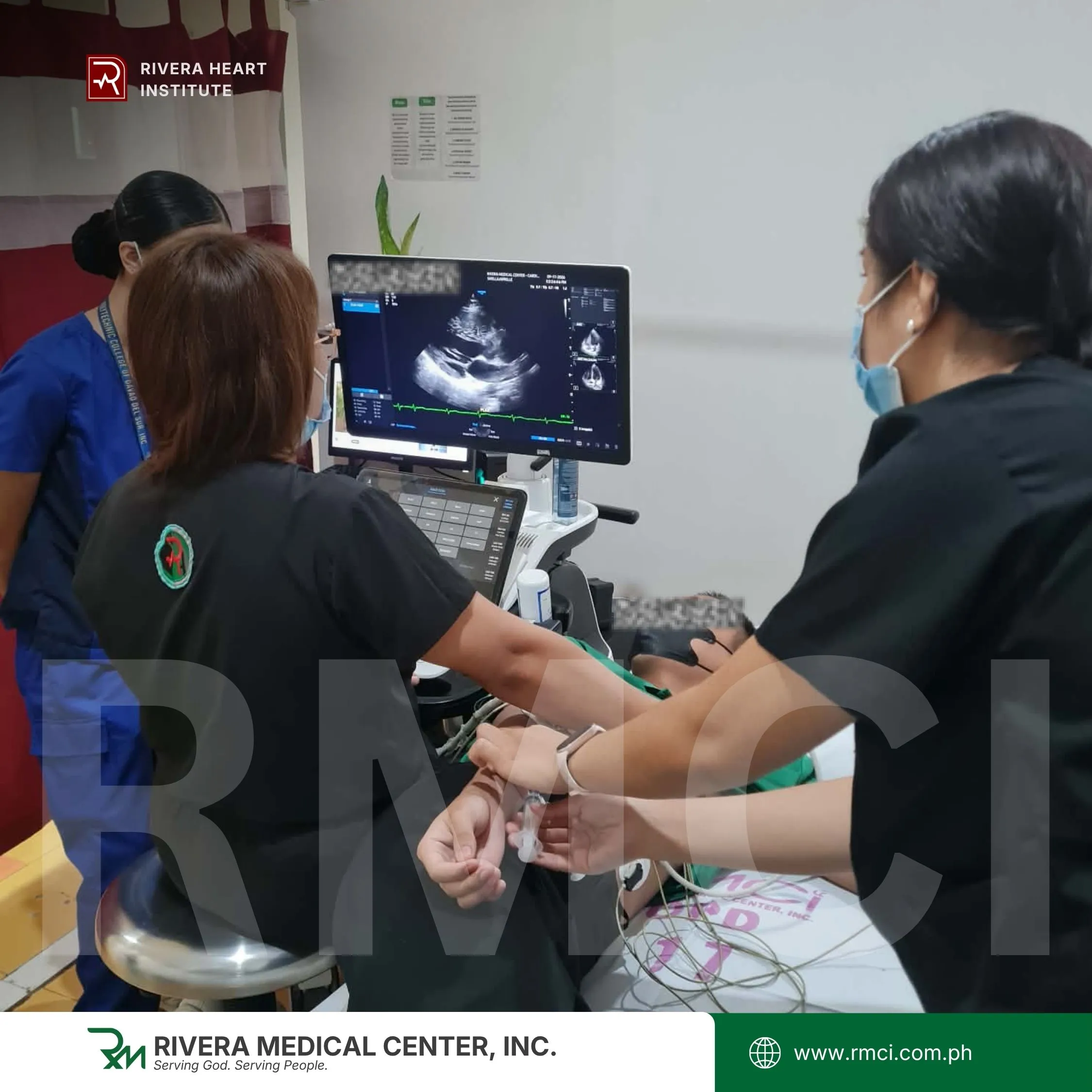
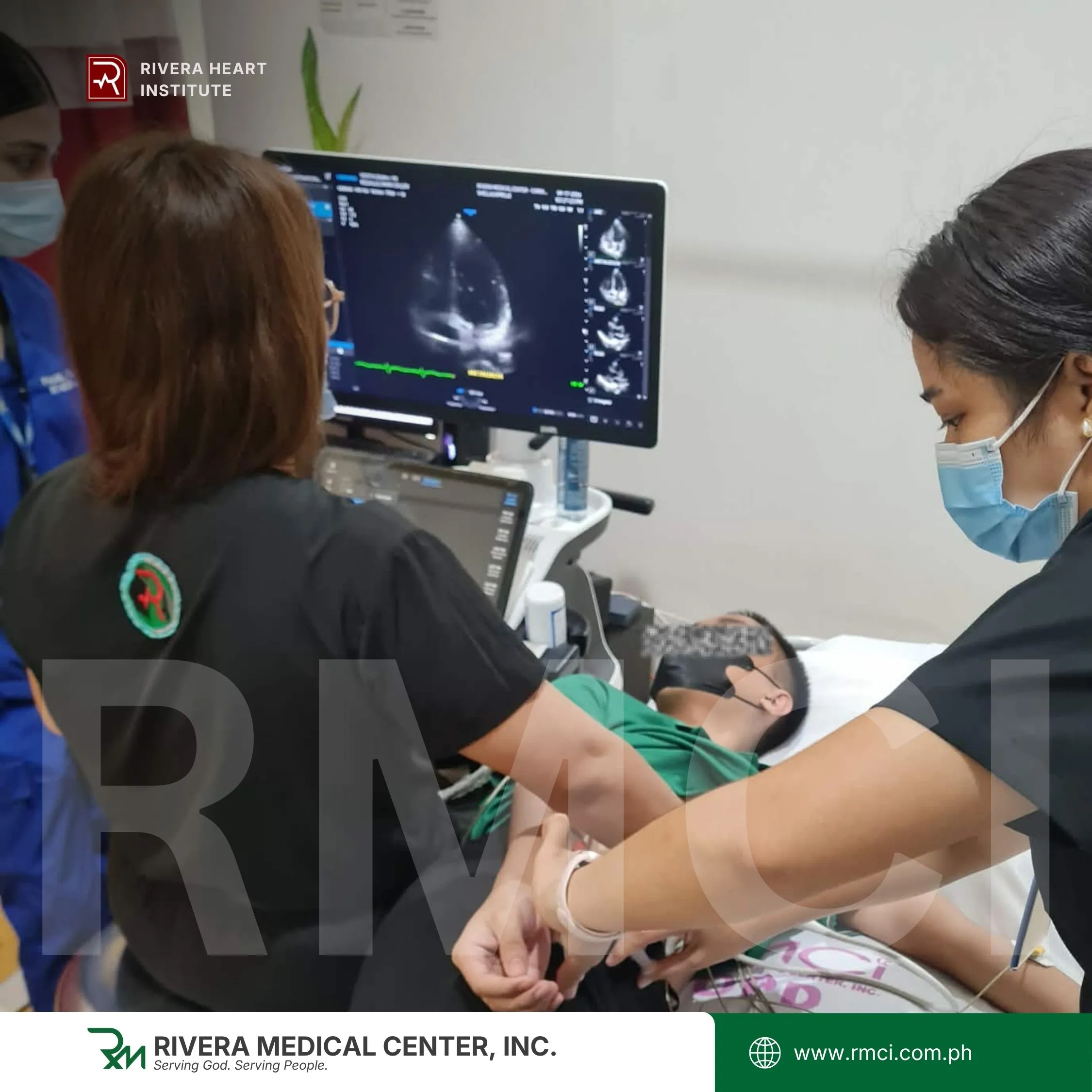
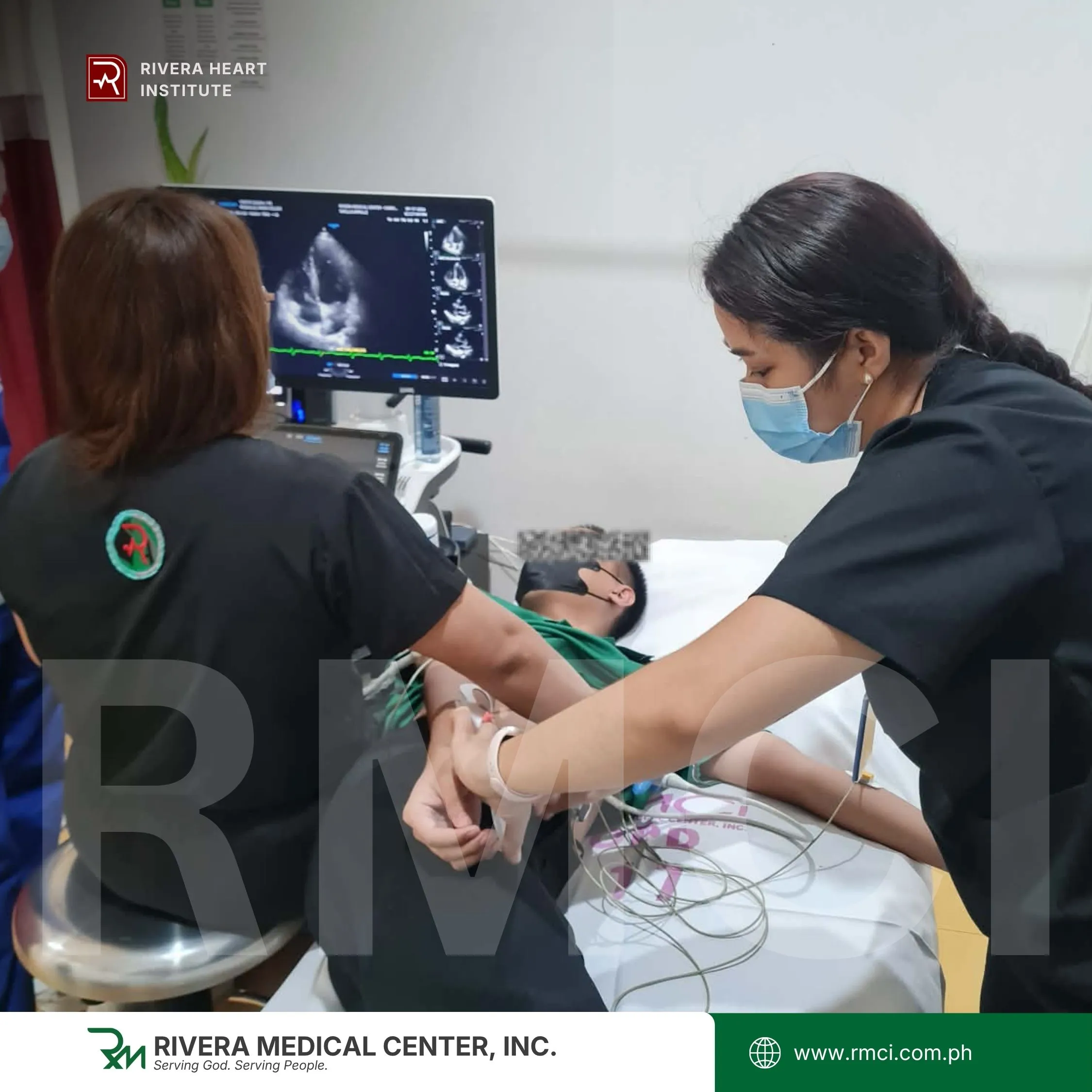
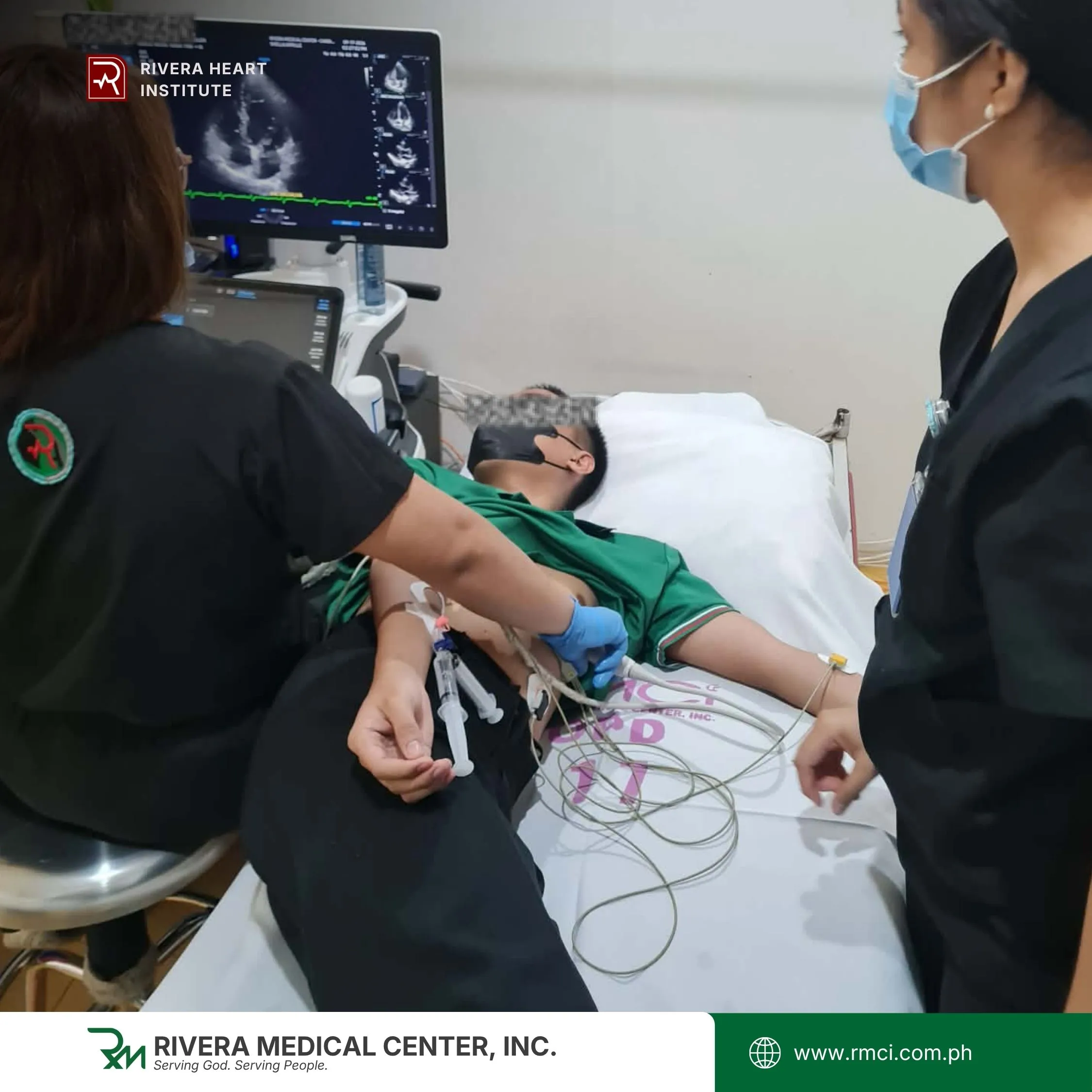
During a bubble study, a small amount of sterile saline solution is mixed to create tiny microbubbles and injected through an intravenous line. The echocardiogram then follows how these bubbles travel through the right side of the heart.
Under normal circumstances, the tiny bubbles should not pass directly from the right side of the heart into the left side. If bubbles are seen appearing where they normally should not, the finding may indicate an abnormal pathway or right-to-left shunt that requires further evaluation. The American Society of Echocardiography identifies agitated saline contrast as an established technique for assessing intracardiac and intrapulmonary shunting.
In simple terms, the test helps doctors answer an important question:
Is blood passing through a pathway in the heart or circulation that normally should not be there?
What Can Bubble Contrast Help Detect?
One of the most common reasons doctors request a Bubble Contrast study is to investigate a possible Patent Foramen Ovale or PFO.
Before birth, babies normally have an opening between the heart’s two upper chambers. This opening usually closes after birth, but in some people, it remains partially open. This is known as a PFO.
PFO is relatively common, occurring in more than 20% to 25% of adults according to American Society of Echocardiography guidance. Many people with a PFO never develop symptoms and may never know they have one.
A bubble study can help show whether microbubbles are able to cross from the right atrium to the left atrium through a PFO. Echocardiography is one of the principal imaging methods used in evaluating PFO, and adding a bubble study may make an abnormal passage easier to identify.
Bubble Contrast may also assist physicians in evaluating other causes of abnormal blood flow, including certain atrial septal defects and, depending on the pattern and timing of the bubbles, possible abnormal connections involving the lungs.
The results must always be interpreted by a qualified physician together with the patient’s symptoms, medical history, and other diagnostic findings.
Why May a Doctor Recommend a Bubble Study?
A cardiologist may request Bubble Contrast Echocardiography when there is a clinical reason to investigate an abnormal connection between the right and left sides of the circulation.
One situation where this may become relevant is during the evaluation of certain patients who have experienced a stroke or transient ischemic attack (TIA) without an immediately identified cause. A physician may investigate whether a PFO or another abnormal pathway could be clinically relevant.
However, having a PFO does not automatically mean that it caused a stroke, and finding one does not necessarily mean that treatment or closure is required. Further evaluation is important because PFOs are common even among otherwise healthy adults.
Bubble Contrast may also be considered when doctors are investigating unexplained findings such as low blood oxygen levels or when structural heart disease is suspected.
The decision to perform the test should therefore come from the patient’s attending physician or cardiologist rather than from symptoms alone.
What Happens During a Bubble Contrast Echocardiogram?
For patients searching for a bubble study in Davao del Norte, the actual procedure is usually straightforward.
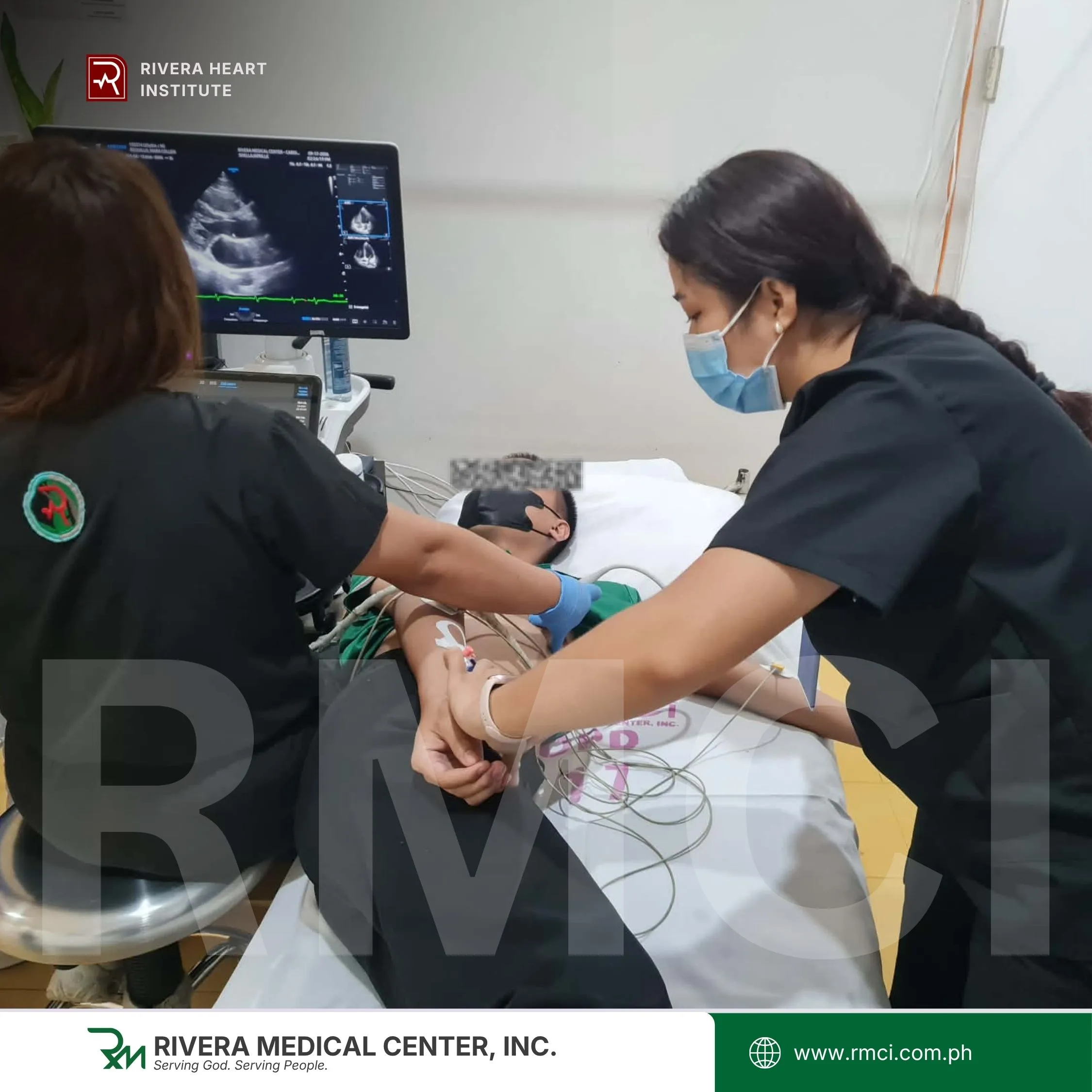
An intravenous line is placed, typically in a vein in the arm. The sonographer obtains ultrasound images of the heart while the saline mixture is prepared. The agitated saline is then injected while the echocardiogram records its movement through the cardiac chambers.
During the examination, the patient may be asked to perform a simple maneuver such as bearing down or briefly holding and releasing pressure, known as a Valsalva maneuver. Coughing may sometimes also be used. These maneuvers temporarily change pressure inside the heart and can make a small right-to-left shunt easier to detect.
The cardiologist then reviews when and where the bubbles appear in relation to the heart chambers.
Bubble Contrast does not use X-rays or ionizing radiation. Because it involves an IV injection and medical imaging, however, it should be performed under appropriate clinical supervision.
Is a Bubble Study the Same as a Regular 2D Echo?
Not exactly.
A 2D Echocardiogram provides detailed ultrasound images of the heart’s chambers, valves, wall motion, size, and overall function.
A Bubble Contrast study adds another diagnostic component by helping physicians visualize whether there is abnormal communication between portions of the circulation.
The two techniques can therefore complement each other. A patient may have a regular echocardiogram first, while Bubble Contrast is added when clinically indicated.
In some circumstances, additional tests such as a transesophageal echocardiogram (TEE) may be recommended because it can provide more detailed images of structures inside the heart. ASE guidance describes TEE as an important reference technique in the detailed assessment of PFO.
Heart Diagnostic Services Closer to Patients in Davao del Norte
Access to specialized heart diagnostics closer to home can make follow-up and evaluation more convenient for patients and their families.
The Rivera Heart Institute in Panabo City provides a location for patients seeking cardiac evaluation within Davao del Norte, including those coming from nearby communities such as Carmen and Tagum City.
For someone searching online for Bubble Contrast in Panabo City, Bubble Contrast in Davao del Norte, a bubble study near Tagum City, or heart diagnostic services near Carmen, Davao del Norte, Rivera Heart Institute provides access to cardiovascular diagnostic services without requiring every patient to travel farther for initial testing.
When Should You Ask Your Doctor About Bubble Contrast?
Bubble Contrast is not a routine test that every heart patient needs. Its value depends on the medical question your doctor is trying to answer.
If you have been advised to undergo further cardiac evaluation—particularly for a possible PFO, abnormal cardiac shunt, or as part of an appropriate stroke-related workup—ask your physician whether Bubble Contrast Echocardiography may be useful in your case.
Early and accurate evaluation gives doctors better information for deciding what, if any, further testing or treatment is appropriate.
Bubble Contrast at the Rivera Heart Institute
For patients in Panabo City, Carmen, Tagum City, and other communities in Davao del Norte, the Rivera Heart Institute at Rivera Medical Center, Inc. offers access to specialized heart diagnostic services, including Bubble Contrast Echocardiography.
Speak with your attending physician or contact the Rivera Heart Institute for information about appointments, test preparation, and whether a Bubble Contrast study has been recommended for you.
Your heart may not always show what is happening on the surface. The right diagnostic test can help your cardiologist take a closer look.
Contact our cardiologists for consultation with your heart health and for more questions about Bubble Contrast Echocardiography.

DR. ARVIN MICHAEL M. ANDOY
Schedule: THU, 1PM-5PM
Clinic Room: RMCI Medical Arts Building, 3rd floor
Contact: 09257076172
CALL NOW
DR. RAMON MIGUEL M. RIVERA
Schedule: MON-TUE, THURS-SAT, 9AM-3PM
Clinic Room: Ground Floor, RMCI Medical Arts Building
Contact: 09257076172
CALL NOW
DR. MYRRENE BLUE D. CABRERA
Schedule: THU, SAT, 10AM-12NN
Clinic Room: 2-2 H Subspecialty Clinic
Contact: 09257807696
CALL NOW
DR. AIDA P. MARANIAN
Schedule: WED, 10AM-12NN
Clinic Room: 2-2 H Subspecialty Clinic
Contact: 09257807696
CALL NOW
DR. ANNE BERNADETTE B. ARANGCON
Schedule: FRI, 1PM-3PM
Clinic Room: Cardio Metabolic
Contact: 09228282345
CALL NOW
DR. ANNIE LORAINE ESTROPE-KHAN
Schedule: By Appointment
Clinic Room: CMU
Contact: 09257076172
CALL NOW