One of the most important questions asked by our patients is how much percentage is covered by PhilHealth in private hospital.
This question is crucial especially for those who underwent operation due to heart disease.
As a private hospital in Davao del Norte, Rivera Medical Center follows guidelines set by PhilHealth to help ease the medical burden of Filipinos. Here are the latest coverage standards set by PhilHealth for patients with heart attack and life-threatening cardiac conditions.
As of 2026, heart disease is still one of the leading causes of mortality in the Philippines, accounting for roughly one in three deaths among Filipinos.
Historically, the financial burden of cardiac care—particularly procedures requiring a Catheterization Laboratory (CathLab)—often forced families into catastrophic debt, not to mention the anxiety of potentially losing a loved one because of heart disease.
A significant shift in heart care occurred in late 2024. Under PhilHealth Circular 2024-0032 and subsequent updates in 2025, the Philippine Health Insurance Corporation (PhilHealth) revolutionized its cardiac benefits and increased its coverage for life-saving procedures.
As of 2026, these expanded benefits under the “Yaman ng Kalusugan” (YAKAP) program and the Universal Health Care (UHC) Act are now fully integrated into the healthcare system. Filipinos now have a robust safety net, which is intended to ease the burden of families of patients who suffered from heart attack, particularly from ST-Elevation Myocardial Infarction (STEMI).
This is a critical, life-threatening medical emergency characterized by the total obstruction of a primary coronary artery. This complete blockage cuts off the oxygen and nutrient supply to a significant portion of the heart muscle, leading to rapid tissue damage and potential heart failure once the blood flow is not immediately restored.
According to PhilHealth’s Benefit Package for Ischemic Heart Disease – Acute Myocardial Infarction (AMI), the coverage for heart attack services has package rates of:
- ₱523,853 for PCI (formerly ₱30,300)
- ₱133,500 for fibrinolysis (formerly ₱30,290)
- ₱21,900 for EMS with coordinated interfacility transfer
- ₱86,140 for cardiac rehabilitation
The most dramatic change in PhilHealth’s policy is the transition of high-cost cardiac interventions into “Z Benefit” packages. These packages are designed for conditions that are medically and financially “catastrophic.”
Commonly known as angioplasty, PCI is the gold standard for opening clogged arteries during or after a heart attack.
Previously, PhilHealth provided a fixed case rate of only ₱30,300—a mere fraction of the actual cost, which can range from ₱200,000 to over ₱500,000 in private facilities.
New 2025–2026 Coverage: PhilHealth now covers up to ₱523,853 for PCI in cases of Acute Myocardial Infarction. This massive increase aims to ensure that “door-to-balloon” time—the time from hospital arrival to artery reopening—is not delayed by financial negotiations.
For patients with multiple blocked arteries where a CathLab intervention is insufficient, CABG (open-heart surgery) is often required.
Expanded Coverage: The benefit for standard-risk CABG has been raised to ₱960,000 (previously ₱550,000). This comprehensive package includes the surgery, hospital stay, and essential post-operative medications.
PhilHealth has also prioritized pediatric cardiology. Surgical repairs for Ventricular Septal Defect (VSD) and Total Correction of Tetralogy of Fallot (TOF) now receive up to ₱614,000 in coverage, ensuring that children born with congenital heart defects have a fighting chance at a healthy life.
Beyond the operating room, PhilHealth has restructured the entire continuum of care for heart attacks, categorized under Acute Coronary Syndrome (ACS).
| SERVICE | 2025-2026 COVERAGE | PURPOSE |
|---|---|---|
|
Fibrinolysis |
₱133,500 |
Life-saving medication to dissolve clots when PCI is not immediately available. |
|
EMS & Transfer |
₱21,900 |
Coordinated ambulance transfer between facilities for urgent cardiac intervention. |
|
Cardiac Rehab |
₱66,140 |
Structured exercise and monitoring after a PCI or heart surgery to prevent recurrence. |
A common pain point in the old PhilHealth system was the “24-hour rule,” which required a patient to be admitted for at least one full day before they can qualify for benefit claims.
Recognizing that heart attacks require immediate, often rapid intervention, PhilHealth officially scrapped this requirement for IHD-AMI cases.
This policy shift allows for:
- Rapid Triage: Patients can be rushed to the CathLab immediately upon diagnosis.
- Outpatient Emergency Care: Under the Outpatient Emergency Care Benefit (OECB) launched in 2025, even those who do not require a multi-day stay can still have their emergency room diagnostic tests (like Troponin levels and ECGs) covered.
To benefit from these expanded rates, patients and their families must keep several key requirements in mind:
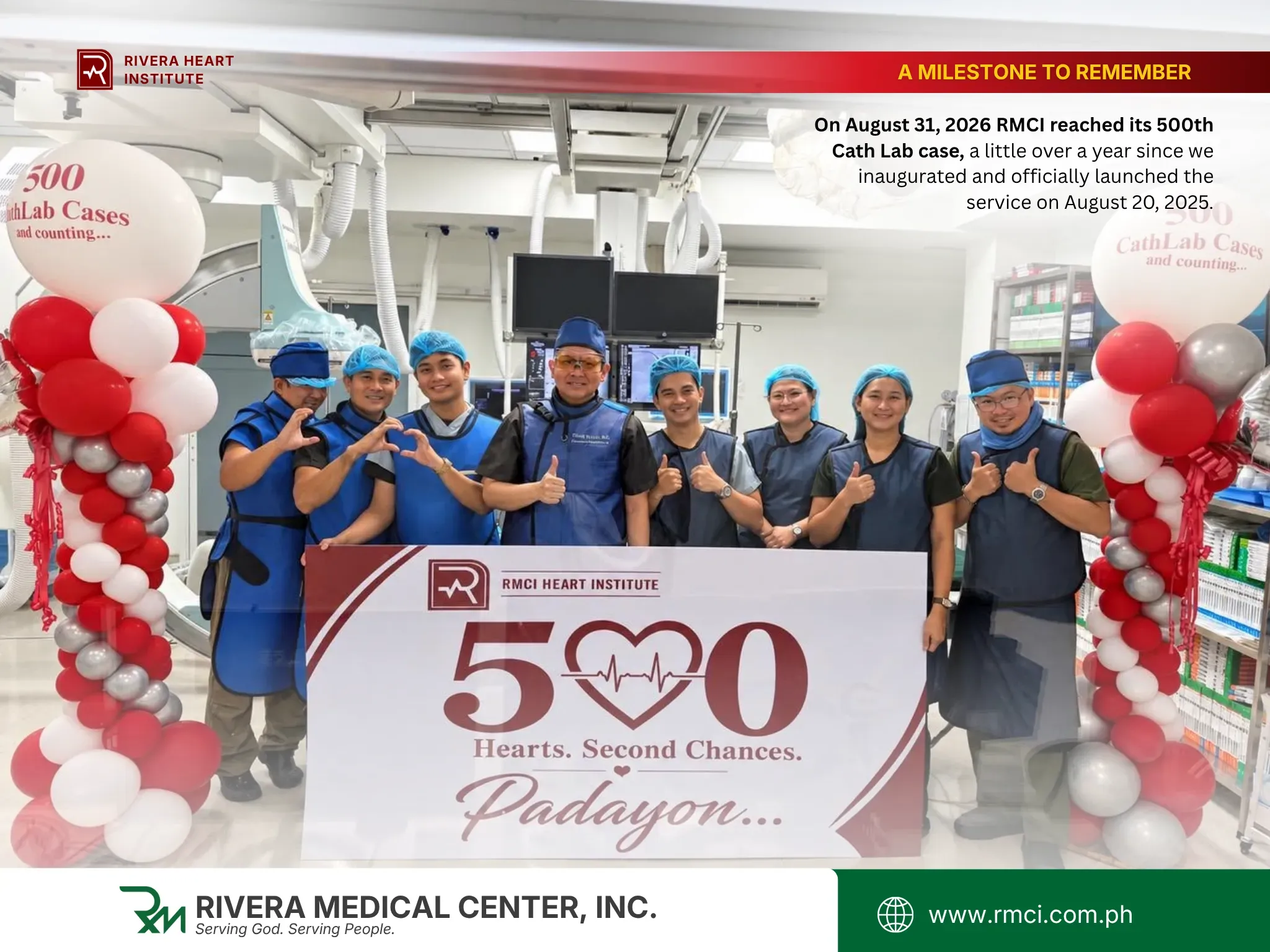
- Accredited Facilities: High-value Z Benefits are typically available at PhilHealth-contracted hospitals equipped with a functioning CathLab and specialized cardiac teams. As of 2026, the only private hospital in Davao del Norte with CathLab and specialized cardiac teams is Rivera Medical Center, Inc. in Panabo City. The other available CathLabs are in the Southern Philippine Medical Center (SPMC) and Davao Doctors Hospital, both of which are in Davao City.
- No Co-Payment Policy: In government “ward” accommodations, the No Co-Payment policy applies, meaning the PhilHealth package should cover the entire bill. In private facilities, PhilHealth serves as a significant deduction, though some out-of-pocket costs may remain depending on the hospital’s tier.
- Membership Status: Under the UHC Law, all Filipinos are “automatic” members. Even if a patient has no prior contributions, they can be enrolled at the point of service to avail of these life-saving benefits.
How much percentage is covered by PhilHealth in private hospital for cardiac-related conditions depends on PhilHealth’s latest guidelines. A heart attack, in particular, has significant coverage from the government, which gives patients and their families huge financial assistance.
Rivera Medical Center lauds the government’s 2025–2026 expansion of PhilHealth’s cardiac coverage. By increasing angioplasty coverage by over 1,600% and removing restrictive administrative hurdles like the 24-hour rule, the government enables both public and private hospitals to serve heart patients better.
While lifestyle changes remain the first line of defense against heart disease, Filipinos can now find solace in knowing that if the worst happens, the financial burden of a heart attack is no longer an insurmountable wall.
For inquiries and consultation about your heart health, contact 09257076172.
Department of Health. (2026). Field health service information system (FHSIS) annual report 2024.
Philippine Health Insurance Corporation. (2024). PhilHealth circular no. 2024-0032: Benefits package for ischemic heart disease – acute myocardial infarction (IHD-AMI).
Philippine Health Insurance Corporation. (2025). Advisory no. 2025-0058: Clarification on IHD-AMI benefit implementation.
Philippine Heart Association. (2022). Revised PhilHealth case rates for hospitalization for acute coronary syndrome in the philippines. Philippine Journal of Cardiology, 50(2).
Philippine Information Agency. (2026, February 10). Listen to your heart: A complete guide to PhilHealth heart health benefits.
Philippine News Agency. (2025, January 10). PhilHealth launches new, expanded benefit packages for 2025.