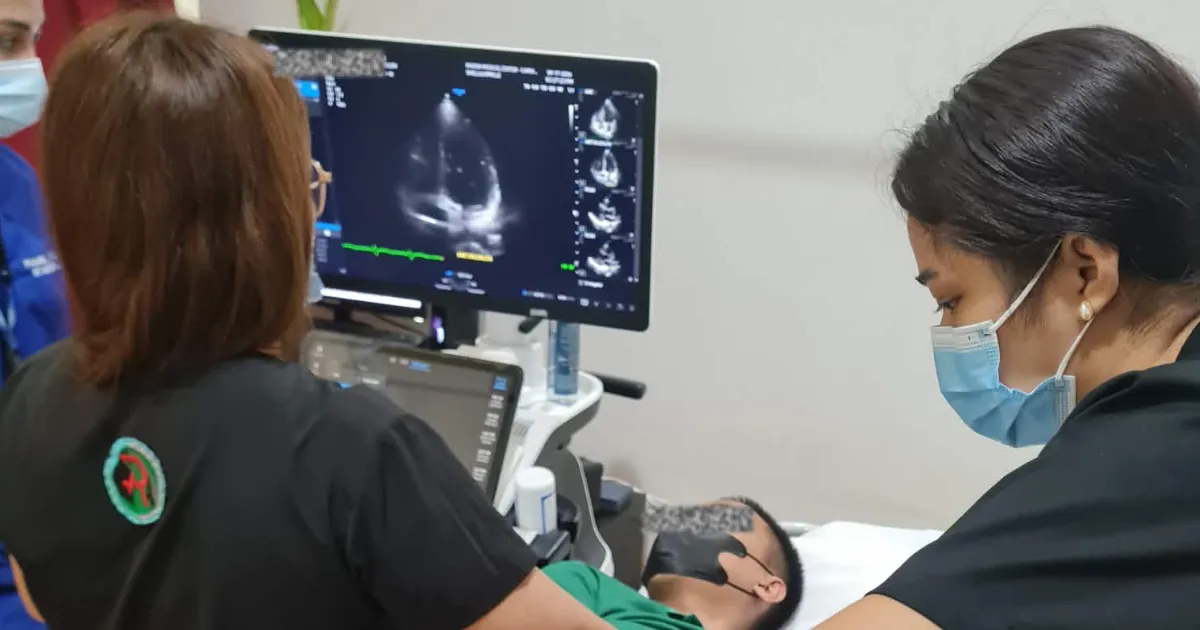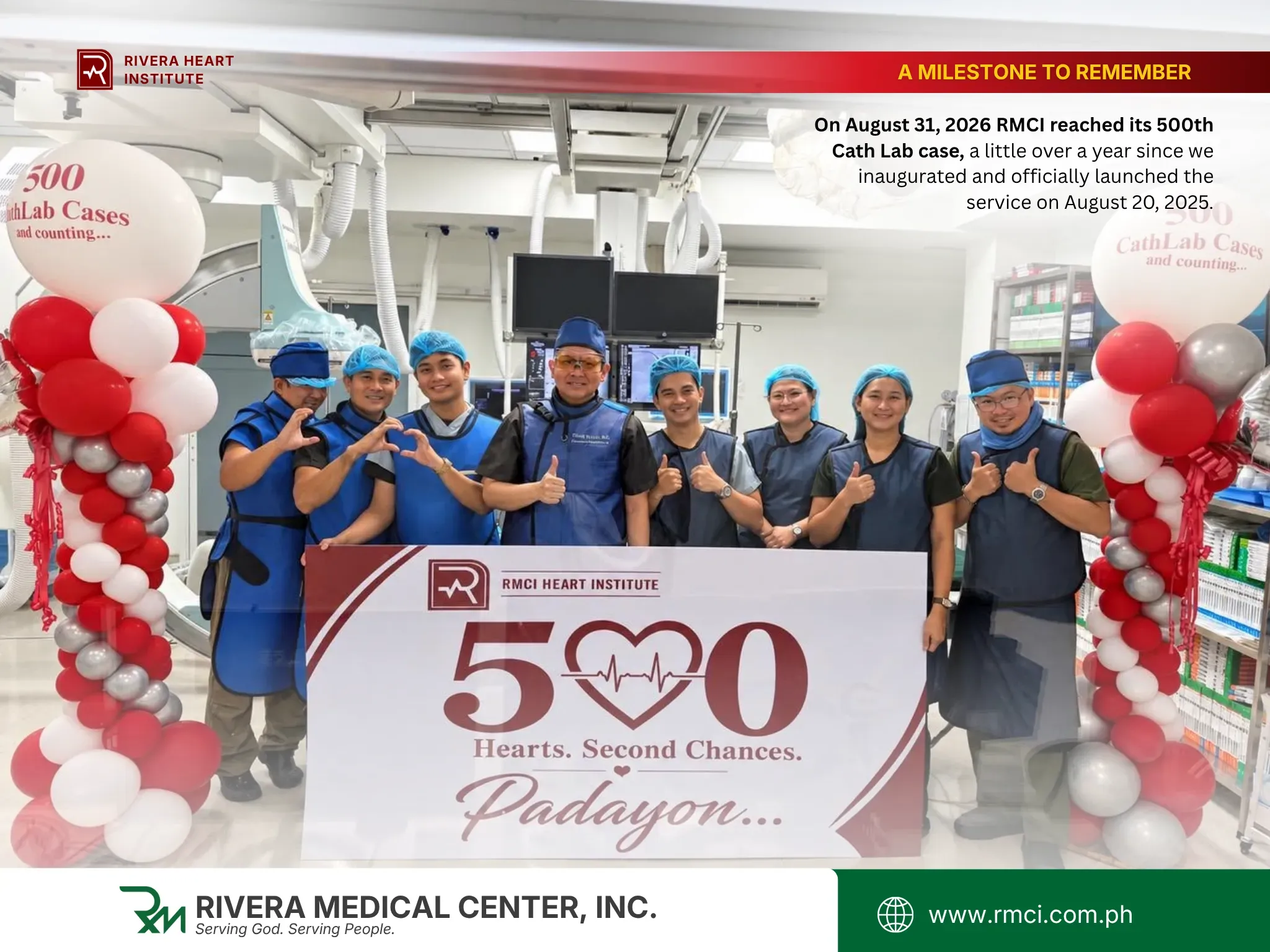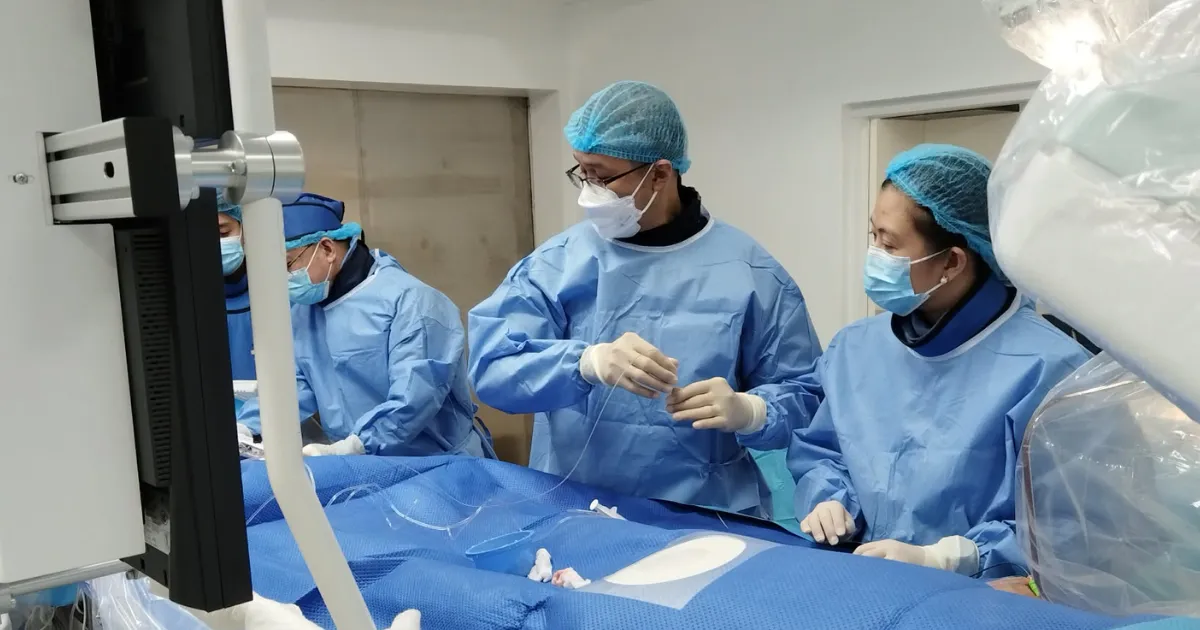
RMCI’s outpatient coronary angiogram service helps address the prevalence of coronary heart disease — currently the top prevalent cause of death in the Philippines.
Many hospitals in the country, especially in the provinces, however, are unable to address this need due to the lack of equipment and skilled interventional cardiologists. As of August 2026, Rivera Medical Center is the only hospital in Davao Region offering outpatient coronary angiograms.
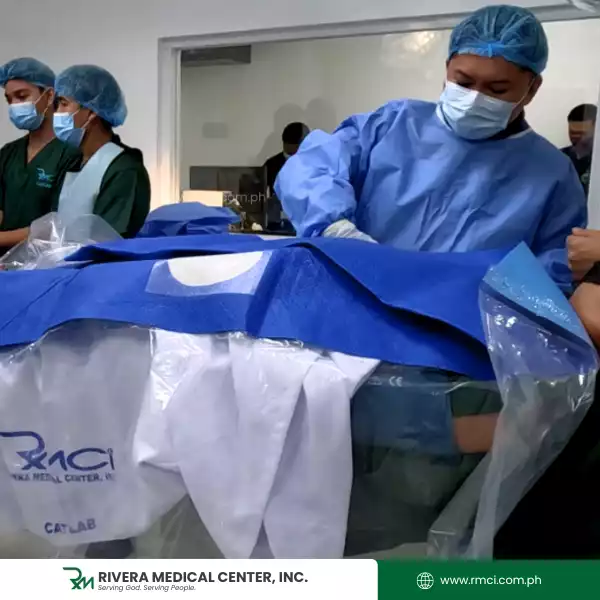
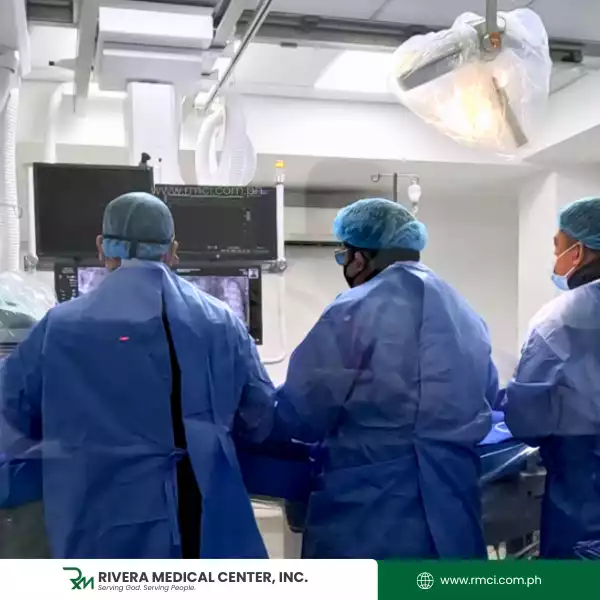
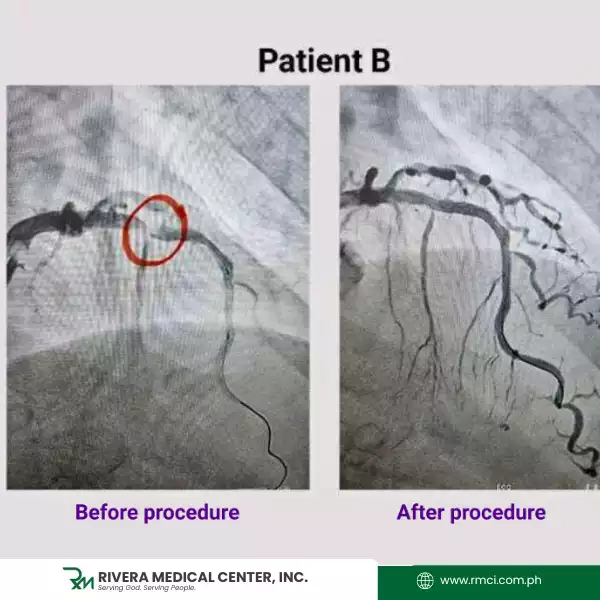
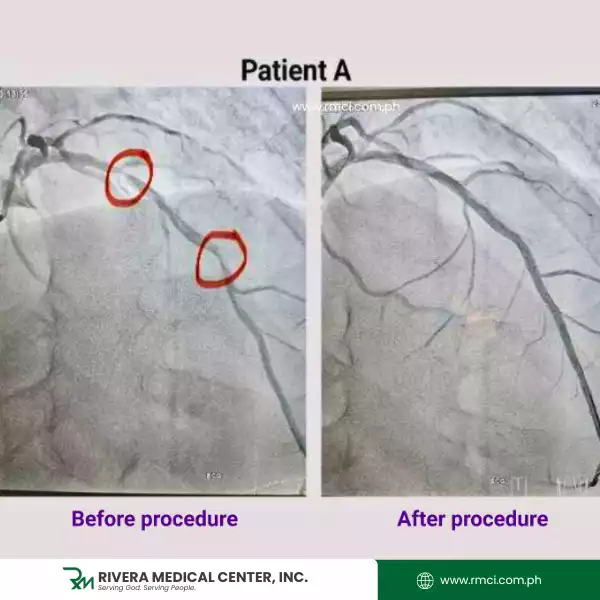
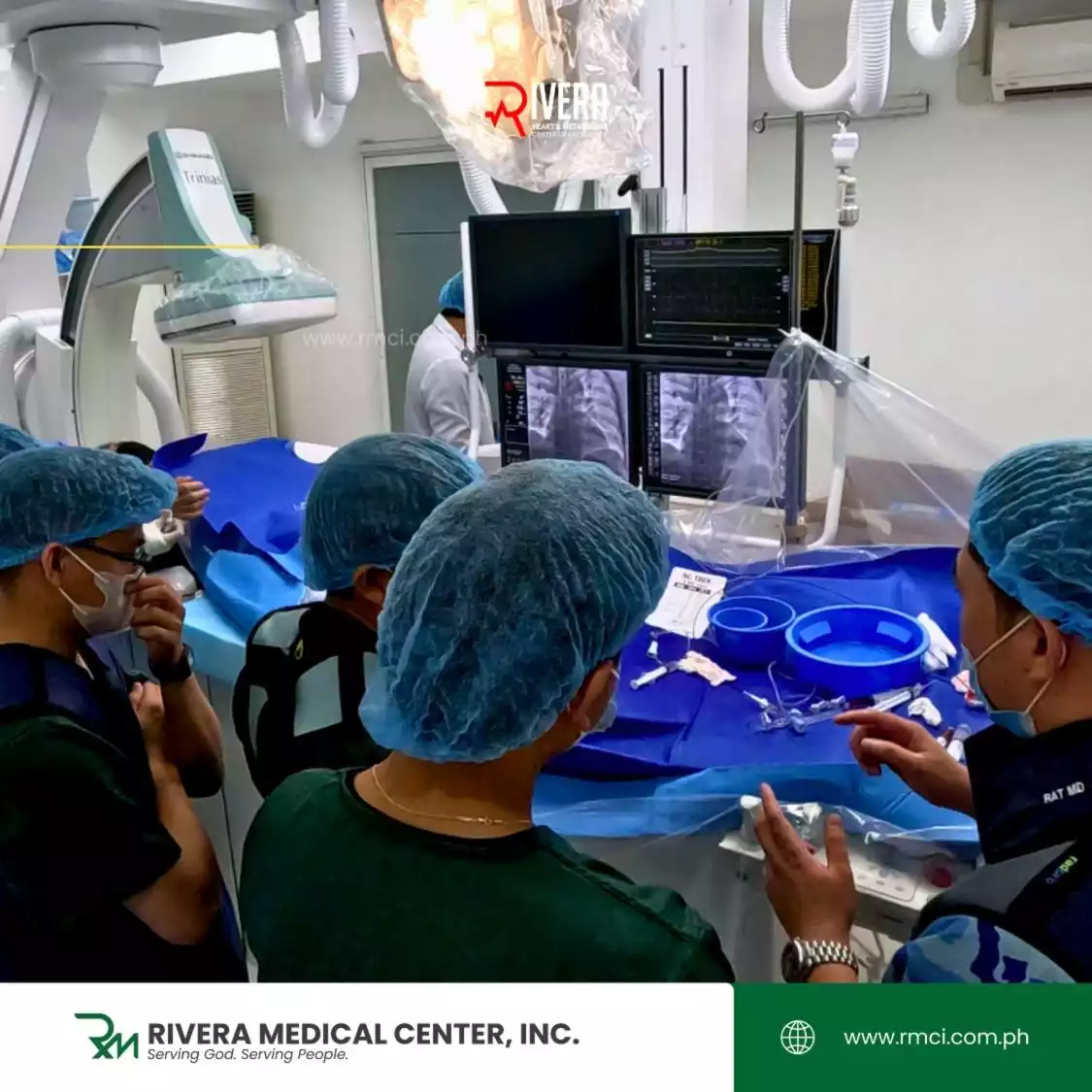
This gives RMCI a huge task and responsibility to cater to the growing heartcare need in the region. These images are random shots from different cases of outpatient angiogram procedures done through RMCI’s Cathlab.
Heart disease remains one of the Philippines’ most serious health challenges. The Department of Health’s National Objectives for Health 2023–2028 identifies ischemic heart disease as the country’s leading cause of mortality, highlighting the continuing need for timely diagnosis and treatment of coronary artery disease.
One important diagnostic procedure is the coronary angiogram, a test that allows cardiologists to see whether the arteries supplying blood to the heart have become narrowed or blocked. Traditionally, patients undergoing cardiac catheterization may expect hospital admission or an overnight stay. However, advances in catheterization techniques—particularly procedures performed through the radial artery in the wrist—have made outpatient or same-day coronary angiography possible for appropriately selected patients.
For the Philippines, where access to specialized cardiovascular care can involve considerable travel and expense, especially outside Metro Manila, outpatient coronary angiography may provide an important option for improving access while reducing unnecessary hospitalization.
What Is a Coronary Angiogram?
A coronary angiogram is an invasive diagnostic procedure performed in a cardiac catheterization laboratory or Cath Lab. A physician inserts a thin catheter into an artery, commonly through the wrist or groin, and carefully guides it toward the heart. Contrast material is then introduced into the coronary arteries while X-ray images are taken.
These images reveal the location and severity of narrowing or blockage in the arteries. The American Heart Association describes coronary angiography as a method for determining whether coronary arteries are narrowed or blocked and helping the medical team decide what treatment may be necessary.
Depending on the findings, the cardiologist may recommend medication and lifestyle management, percutaneous coronary intervention (PCI) such as angioplasty and stenting, or coronary artery bypass grafting (CABG).
Importantly, a coronary angiogram is different from a CT coronary angiogram. A conventional coronary angiogram requires arterial catheterization, while CT coronary angiography is a non-invasive imaging examination performed using a CT scanner.
What Makes a Coronary Angiogram “Outpatient”?
An outpatient coronary angiogram does not mean that the procedure is performed in an ordinary clinic. It is still conducted in an appropriately equipped Cath Lab with trained cardiovascular personnel and facilities for monitoring and managing complications.
“Outpatient” generally means that a properly selected patient can undergo an elective coronary angiogram, remain under observation afterward and, if clinically stable and cleared by the medical team, return home on the same day instead of routinely staying overnight.
The concept has become increasingly practical because of improvements in catheter technology, vascular-access techniques and post-procedure monitoring.
Recent evidence supports carefully planned same-day pathways. A 2024 study of elective transradial coronary angiography developed a same-day model covering assessment before, during and after the procedure, followed by post-discharge monitoring. In its small pilot group, 95% of patients were successfully discharged within one day.
Evidence is even broader for coronary procedures that include PCI. A 2024 structured review and meta-analysis found no increase in major adverse events with same-day discharge compared with overnight observation among appropriately selected patients undergoing coronary procedures through radial access.
Why the Wrist Has Changed Cardiac Catheterization
One of the most important developments supporting outpatient coronary angiography is the increasing use of transradial access.
Instead of introducing the catheter through the femoral artery in the groin, the cardiologist can enter through the radial artery in the wrist. Contemporary catheterization guidance encourages a “radial-first” approach for coronary angiography and PCI because of its advantages in reducing access-site bleeding and vascular complications.
For patients, radial access also has practical advantages. Because the puncture is in the wrist rather than the groin, patients generally do not need the prolonged flat bed rest associated with femoral access.
Newer techniques continue to improve radial procedures. A 2025 meta-analysis comparing distal and conventional transradial access found that distal radial access was associated with lower rates of radial artery occlusion and hematoma and shorter hemostasis time, although it also had technical disadvantages, including lower puncture success and longer puncture time.
These findings demonstrate an important point: outpatient coronary angiography is not simply about sending patients home earlier. It depends on appropriate patient selection, skilled operators, suitable vascular access and structured monitoring before discharge.
Who May Be Considered for Outpatient Coronary Angiography?
Same-day discharge is generally most appropriate for selected patients undergoing a planned, elective diagnostic procedure whose medical condition and procedural outcome allow safe discharge.
At RMCI, the final decision belongs to the interventional cardiologist and medical team. Factors such as unstable symptoms, significant bleeding, abnormal vital signs, kidney problems, complications during catheterization or the need for immediate intervention may require prolonged monitoring or hospital admission.
Patients should therefore understand that being scheduled for an outpatient angiogram does not guarantee same-day discharge. Based on our experienced with Cath Lab patients, tThe results of the angiogram itself may change the plan.
Modern guidelines also emphasize that invasive coronary angiography should be used when clinically appropriate rather than as a routine test for everyone with possible heart disease. The 2024 European Society of Cardiology guidance, for example, recommends invasive coronary angiography particularly for patients with a high likelihood of obstructive coronary artery disease, severe symptoms despite medical therapy, angina at low levels of exertion or high cardiovascular-event risk.
What Happens on the Day of the Procedure?
Preparation usually begins before the patient arrives at the Cath Lab. Patients may be instructed not to eat or drink for several hours beforehand and should inform their medical team about their medications, diabetes, kidney disease and previous reactions to contrast material. Medication instructions must come from the treating physician; patients should not independently stop blood thinners, aspirin or diabetes medicines.
During coronary angiography, the access area is cleaned and numbed with local anesthetic. The patient normally remains awake, although medication may be provided to help with relaxation. The catheter is guided toward the coronary arteries, contrast is administered and X-ray images are obtained.
Afterward, the catheter is removed and pressure or a compression device is applied to control bleeding. The patient is then observed while the healthcare team monitors vital signs, the puncture site and overall condition.
If recovery is uncomplicated and established discharge criteria are met, an outpatient patient may be cleared to return home.
What Happens After Going Home?
Same-day discharge does not eliminate the need for recovery precautions. Patients should follow their hospital’s specific instructions regarding medications, bathing, physical activity, wound care and return to work.
Mayo Clinic advises patients recovering from coronary angiography to maintain appropriate hydration, avoid strenuous activity and heavy lifting for the period recommended by their healthcare team, and watch the catheter insertion site carefully.
Patients should seek medical attention for warning signs such as persistent or significant bleeding, increasing swelling or pain around the puncture site, chest pain, shortness of breath, fever, drainage from the wound, or changes in the temperature, sensation or color of the arm or leg used for vascular access.
Outpatient Coronary Angiography in Mindanao
The development of Cath Lab services outside Metro Manila is particularly important for Mindanao patients. Current publicly available evidence specifically studying outpatient coronary angiography in Mindanao remains limited, so it would be premature to claim that same-day coronary angiography is already standardized throughout the region.
However, advanced coronary diagnostic capability is increasingly available.
In Davao Region, access has now expanded north of Davao City, mainly because of Rivera Medical Center. In 2025, RMCI opened the first Cath Lab in Davao del Norte to provide Cath Lab procedures, which include coronary angiography, with catheter access through an artery in the arm and X-ray imaging using contrast to identify coronary narrowing or blockage.
These developments are significant because advanced cardiovascular diagnosis does not necessarily have to be concentrated in Metro Manila. Expanding Cath Lab capability across Mindanao can potentially reduce the distance patients must travel for specialized cardiovascular evaluation.
A More Convenient Path to Heart Diagnosis
Outpatient coronary angiography represents more than convenience. When performed in appropriately selected patients within a properly equipped cardiovascular facility, it can make the diagnostic process more efficient while avoiding an unnecessary overnight hospital stay.
It should not, however, be viewed as the right option for every patient. Coronary angiography remains an invasive medical procedure with possible complications, including bleeding, blood-vessel injury, abnormal heart rhythms, allergic reactions to contrast, kidney injury, heart attack and stroke, although major complications are uncommon.
For the Philippines—and particularly for communities in Mindanao—the growth of regional Cath Lab services creates opportunities to bring sophisticated cardiovascular diagnosis closer to patients. Combined with careful patient selection, transradial techniques, structured monitoring and clear post-procedure instructions, RMCI’s outpatient coronary angiography can become an important part of making modern heart care more accessible, efficient and patient-centered in Davao del Norte and beyond.
IMPORTANT: Coronary angiogram is not always the answer to blocked arteries. A specialist needs to check and do mandatory tests first so you can see the pros and cons of this service before making the decision. To know if coronary angiogram is best for your heart condition, contact our cardiologists.

DR. ARVIN MICHAEL M. ANDOY
Schedule: THU, 1PM-5PM
Clinic Room: RMCI Medical Arts Building, 3rd floor
Contact: 09257076172
CALL NOW
DR. RAMON MIGUEL M. RIVERA
Schedule: MON-TUE, THURS-SAT, 9AM-3PM
Clinic Room: Ground Floor, RMCI Medical Arts Building
Contact: 09257076172
CALL NOW
DR. MYRRENE BLUE D. CABRERA
Schedule: THU, SAT, 10AM-12NN
Clinic Room: 2-2 H Subspecialty Clinic
Contact: 09257807696
CALL NOW
DR. AIDA P. MARANIAN
Schedule: WED, 10AM-12NN
Clinic Room: 2-2 H Subspecialty Clinic
Contact: 09257807696
CALL NOW
DR. ANNE BERNADETTE B. ARANGCON
Schedule: FRI, 1PM-3PM
Clinic Room: Cardio Metabolic
Contact: 09228282345
CALL NOW
DR. ANNIE LORAINE ESTROPE-KHAN
Schedule: By Appointment
Clinic Room: CMU
Contact: 09257076172
CALL NOW