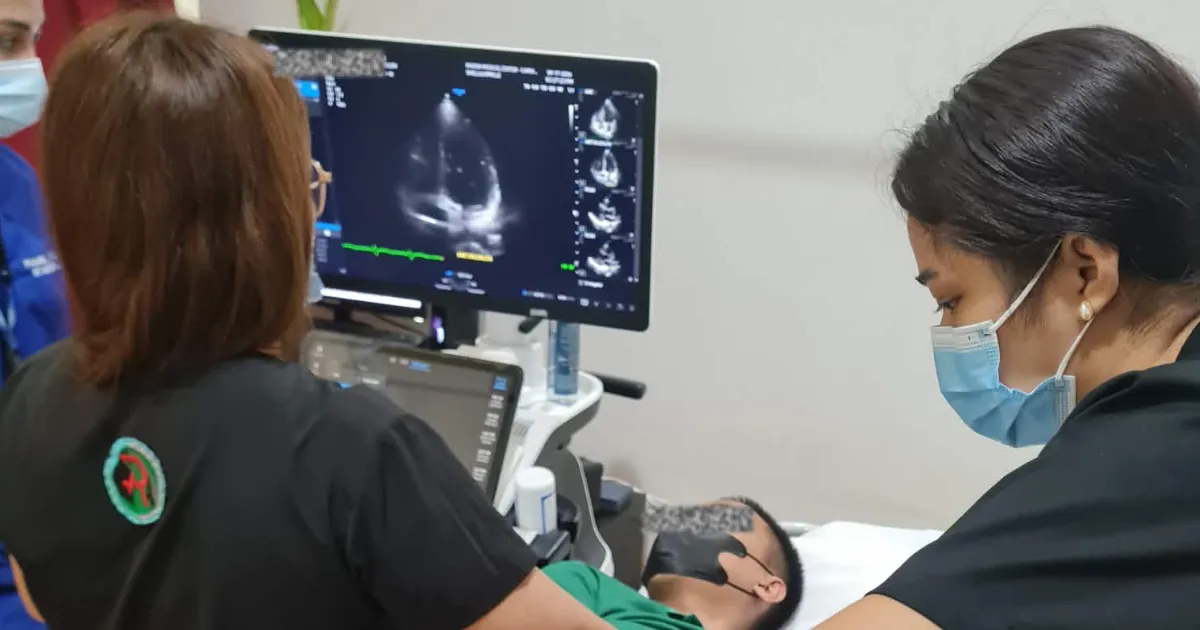
There are several hospitals in Panabo City, Davao Region which cater to the city’s growing healthcare needs. Rivera Medical Center, Inc. is one of the premier hospitals in Panabo City. Other hospitals in the city include the Somoso General Hospital, Good Shepherd Hospital of Panabo City, Inc., and the Panabo Polymedic Hospital, Inc.
These hospitals help complement the city’s ongoing efforts to provide quality health services for all residents in Panabo and Davao.
The First Clinics and Hospitals in Panabo City
Before Panabo achieved the status as a city, healthcare access was limited. Residents in Panabo often traveled to Davao City or flew to the National Capital Region address serious medical needs. Rivera Medical Center and Somoso General Hospital were the pioneering institutions that changed the condition of healthcare in Panabo:
1. Rivera Medical Center: As early as 1957, Dr. Emilio B. Rivera put up a small clinic beside his home in Panabo, to serve the needs of local families. Over the years, the clinic expanded to 22-bed primary care hospital, until it reached the status of tertiary hospital with a 170-bed capacity by 2014. As of 2025, RMCI is a Level 2 hospital with a 100-bed capacity, offering advanced services and modern facilities.

2. Somoso General Hospital: This hospital was founded in 1975 by Dr. Cesar U. Somoso and Dr. Anita B. Somoso. It started as Clinica Somoso, a 10-bed clinic that soon became a lying-in hospital. Within a year, the clinic expanded to 25 beds and later became Somoso General Hospital (SGH), a secondary hospital capable of providing advanced medical care to residents in Panabo and nearby municipalities. Somoso General Hospital is also Level 2 hospital.
Hospitals like RMCI and SGH played a crucial role in making healthcare accessible to Panabo residents. Together with other hospitals in Davao, the progress of healthcare and hospitals in Panabo City effectively reduces the need for locals to travel far in order to get the medical care they are looking for.
Growth of Public Health Services | Panabo City Health Office (CHO)
Categorization of Healthcare Facilities in the Philippines
Services Provided
Based on information from the 2022 circular from the Philippine Health Insurance Corporation’s website, titled “Annex A: Selection Criteria,” hospitals in Panabo City and Davao Region can be categorized based on the services they provide.
General Hospitals – These are medical centers that care for people with all types of illnesses, injuries, or health problems.
General hospitals usually have different departments, such as outpatient services for patients who don’t need to stay overnight, an emergency room for urgent cases, and areas for family medicine, pediatrics (children’s health), internal medicine, and obstetrics-gynecology (women’s health and childbirth).
General hospitals also have surgery rooms, labs for testing, imaging facilities like X-ray or MRI, and a pharmacy where patients can get their medicine.
Specialty Hospitals – These are tertiary hospitals that focus on treating patients with specific health problems that need many types of treatments. For example, some hospitals treat patients with bone and muscle problems like the Philippine Orthopaedic Center, or mental health issues like the National Center for Mental Health.
Other specialty hospitals focus on diseases that affect certain organs, such as the Lung Center of the Philippines for lung diseases or the Philippine Heart Center for heart problems. There are also hospitals that care for specific groups of people, like children at the National Children’s Hospital or women at the Dr. Jose Fabella Memorial Medical Center.
These tertiary hospitals are found throughout the country and serve as referral centers, meaning patients are sent there from other hospitals when they need advanced care and specialized services.
Service Capability
Hospitals in Panabo City and Davao Region can also be categorized based on their service capability.
Level 1 hospitals are the most basic type of hospital. They usually have facilities for isolating patients with contagious diseases, a place for mothers to give birth (maternity clinic), a dental clinic, basic X-ray services, a secondary clinical laboratory for simple tests with a consulting pathologist, a blood station, and a pharmacy where you can get medicine.
Level 2 hospitals offer more advanced care. They have specialized departments for different medical fields, units for patients with breathing problems (respiratory units), an Intensive Care Unit (ICU) for very sick patients, a Neonatal Intensive Care Unit (NICU) for sick newborns, a High-Risk Pregnancy Unit (HRPU), a better-equipped laboratory, and more advanced X-ray services. Rivera Medical Center, Inc. is a Level 2 hospital.
Level 3 hospitals are the most advanced in their medical service capability. They provide teaching, training, and research for doctors and other health workers. They also have physical medicine and rehabilitation services, facilities for outpatient surgery (ambulatory surgery), dialysis for patients with kidney problems, the most advanced laboratory tests (tertiary laboratory), a blood bank, and the most advanced X-ray and imaging services.
In Davao Region, Southern Philippines Medical Center (SPMC), Brokenshire Integrated Health Ministries Inc, (BIHMI), Davao Doctors Hospital (DDH), and San Pedro Hospital (SPH) are categorized, as of writing, as Level 3 hospitals.
Hospital Ownership
Government hospitals are hospitals that are owned by the government and get their money from government funds. These hospitals are meant to serve the public and usually provide care to everyone, including people who can’t afford to pay.
Private hospitals are owned by private companies or organizations. They are funded by payments from patients, health insurance, or sometimes by special programs or embassies. Private hospitals can be run to make a profit or as non-profit organizations. They are not mainly funded by the government, and patients usually pay for their services, either directly or through health insurance.
Hospitals in Panabo City: Challenges to face
As part of its progress, Panabo City faces several challenges in its healthcare system.
- Population Growth: More residents mean greater demand for hospitals, doctors, and medicines.
- Rural Access: Some barangays are far from the city center, making it hard for residents to reach hospitals. The new infirmary hospitals and health centers help address this problem.
- Funding: Building and maintaining hospitals requires significant funding, which the city and provincial governments, along with the DOH, work together to secure.
Conclusion
The history of healthcare in Panabo City highlights the importance of early clinics like Rivera Medical Center in shaping the city’s health services. Thanks to the efforts of dedicated doctors, nurses, city leaders, and the Department of Health, residents in Panabo City and Davao Region have a brighter and healthier future.